C.R. Reddy Cancer Center · Leela Mahal Road, Nellore
Dr. Haritha ChiramanaMD, DMSenior medical oncologist & hemato-oncologistNellore Patient guides Book a Consultation
← All cancer sites

Head & Neck Cancer

Oral cavity · Oropharynx (HPV) · Larynx · Hypopharynx · Nasopharynx (EBV) · PD-L1 CPS · Key points for clinicians · Last updated 11 October 2026

For health professionals. This section uses clinical terms and is general education for doctors, nurses and students, not advice for an individual patient. Patients and families: please read our patient guides instead, Cancer Myth Busters · Understanding your cancer report · Living through cancer treatment, or speak with your own doctor.

Who this page is for, and where to start

Printable PDFs for this moduleMini reviews, slides, algorithms, quick references and the MCQ booklet are on the Printable Teaching Resources page · Online MCQ bank. No PDF downloads are kept on this page.
For your patientsPlain-language Telugu–English answers for patients and families: the Head and neck cancer Myth Busters (32 myths), symptoms and warning signs and the Telugu handouts.
SurgeonsScreening and workup (03), local therapy with surgery types (05), algorithms (07), cases (11)
Physicians & oncologistsBiomarkers (04), systemic therapy (06), algorithms (07), survivorship (08), cases (11)
Postgraduate residentsOncology and other specialities: case vignettes (11), landmark trials (09) and 88 cited trials (12) for exams and journal clubs
Medical studentsAt a glance (01), presentation and common traps (02), the figures, and follow-up (08)

Prepared and reviewed by Dr. Haritha Chiramana, MD, DM, Senior Medical Oncologist & Hemato-Oncologist, C.R. Reddy Cancer Center, Nellore, Andhra Pradesh, India. She teaches oncology to postgraduates and medical students; colleges and departments may write to info@drharitha.co.in for teaching sessions. Printable Teaching Resources and how to cite → Phone 0861 232 5344 · WhatsApp +91 79896 42272.

01 At a glance
  • Lip and oral cavity cancer is the commonest cancer in Indian men: roughly 1.4 lakh new cases and 80,000 deaths a year (GLOBOCAN 2022), about a third of the world total. Worldwide, head and neck cancer causes about 900,000 cases and over 400,000 deaths a year; men outnumber women 2–4 to 1.
  • More than 90% are squamous cell carcinomas. The site decides the cause, the first symptom and the route of spread: the oral cavity (tobacco chewing, areca nut; buccal-gingival cancers in India), the oropharynx (tonsil and base of tongue; HPV-driven in 70–80% in the West but a minority in India) and the larynx and hypopharynx (smoking and alcohol). The nasopharynx is a distinct, EBV-driven disease, rare in India except in the north-east (see section 06).
  • Stage drives cure: about 70–90% of patients with stage I–II disease are alive at 5 years, usually after a single treatment (surgery or radiotherapy). Two-thirds of Indian patients present with stage III–IV disease, which needs two or three modalities and costs function as well as money.
  • Since 2024 the treatment map has moved: perioperative pembrolizumab for resectable PD-L1-positive disease (KEYNOTE-689 [1]), nivolumab added to postoperative chemoradiation for HPV-negative high- risk disease (NIVOPOSTOP [2]) and immunotherapy first line for recurrent or metastatic disease (KEYNOTE-048 [3]).
  • The avoidable harms in Indian practice are delay before the biopsy (ulcers treated with ointments, neck nodes treated as tuberculosis, hoarseness treated as a cold), unplanned radiotherapy gaps, and teeth extracted after radiotherapy.
Three working groups
Figure 1. Three working groups. More than 90% of head and neck cancers are squamous cell carcinomas; the site decides the cause, the first symptom, the route of spread and the first treatment. Proportions are approximate (Indian hospital-based registries).
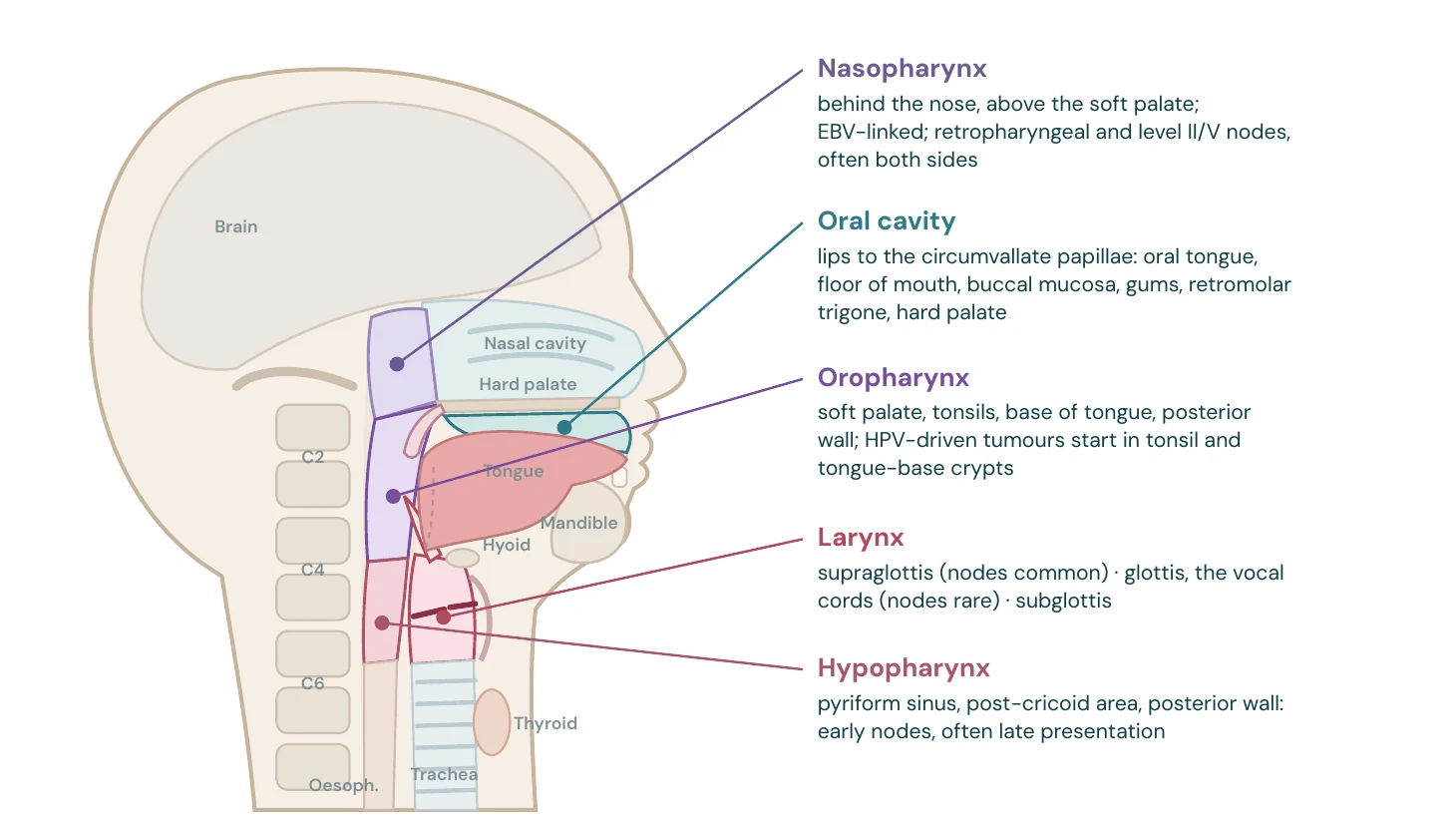
Where head and neck cancers arise (midsagittal section, schematic)
Figure 2. Where head and neck cancers arise (midsagittal section, schematic). Each subsite has its own staging table, nodal drainage and operation; the oral cavity ends at the circumvallate papillae and the junction of hard and soft palate, where the oropharynx begins.
02 Clinical presentation, common traps & genetic causes

Who is at risk

FactorSize of riskClinical note
Smoked tobacco (cigarettes, bidis, cigars, pipes)5- to 25-fold in heavy smokers; dose- dependent; excess risk fades over about 20 years after stoppingLarynx, hypopharynx, oropharynx and oral cavity (INHANCE [4]).
Smokeless tobacco and areca nut (gutka, khaini, zarda, mawa, pan, pan masala)Areca nut alone is an independent carcinogen; effect multiplies with tobacco and alcoholThe main cause of buccal mucosa and gingivobuccal cancers in India; also oral submucous fibrosis (Guha 2014 [5]).
AlcoholFive- to sixfold at >50 g/day; multiplies tobacco riskSpirits carry more risk than wine in some studies; alcohol-containing mouthwash used heavily adds a little.
HPV (mainly type 16)Causes most tonsil and base-of- tongue cancers in high-income countriesYounger, often non-smoking patients with small primaries and cystic neck nodes; much less common in India.
Epstein-Barr virusNasopharyngeal carcinomaUndifferentiated cancer in a neck node: test EBER and look at the nasopharynx.
Poor oral hygiene, chronic traumaModest independent risk (INHANCE [6])Sharp teeth and ill-fitting dentures are not proven causes, but they hide and irritate lesions: examine under them.
Immunosuppression, Fanconi anaemia, prior head and neck RTHigher and earlier riskFanconi anaemia: cancers at a young age and extreme sensitivity to RT and cisplatin.
Oral potentially malignant disordersErythroplakia highest risk; leukoplakia and oral submucous fibrosis lower but realBiopsy the reddest or thickest area; stop tobacco and areca nut; follow up for life.

How head and neck cancers present

SiteTypical first symptomWhat to know
Oral cavityNon-healing ulcer, white or red patch, lump, loose tooth, ill-fitting denture, trismusBuccal cancers are often treated as infection or trauma and seldom present as T1. Numb lip or chin means mandibular nerve invasion.
OropharynxSore throat, pain on swallowing, referred earache; painless neck lump (HPV)A cystic neck "branchial cyst" in an adult over 40 is a metastasis until proven otherwise. Palpate the base of tongue.
Larynx (glottis)HoarsenessHoarseness >3 weeks in a smoker needs laryngoscopy, not antibiotics. Glottic cancer is found early and rarely spreads to nodes.
Larynx (supraglottis), hypopharynxPain or difficulty swallowing, referred earache, neck mass, late stridorUsually late and node-positive; weight loss and aspiration common.
NasopharynxNeck node (often level II or V, bilateral), unilateral serous otitis media, nasal block or bleeding, double vision or facial numbnessEBV-driven; MRI and nasoendoscopy; treated with radiotherapy and chemotherapy, not surgery (see section 06, nasopharyngeal carcinoma).
Any siteNeck mass without an obvious primaryFNAC first; never excise a neck node before examining the upper aerodigestive tract.
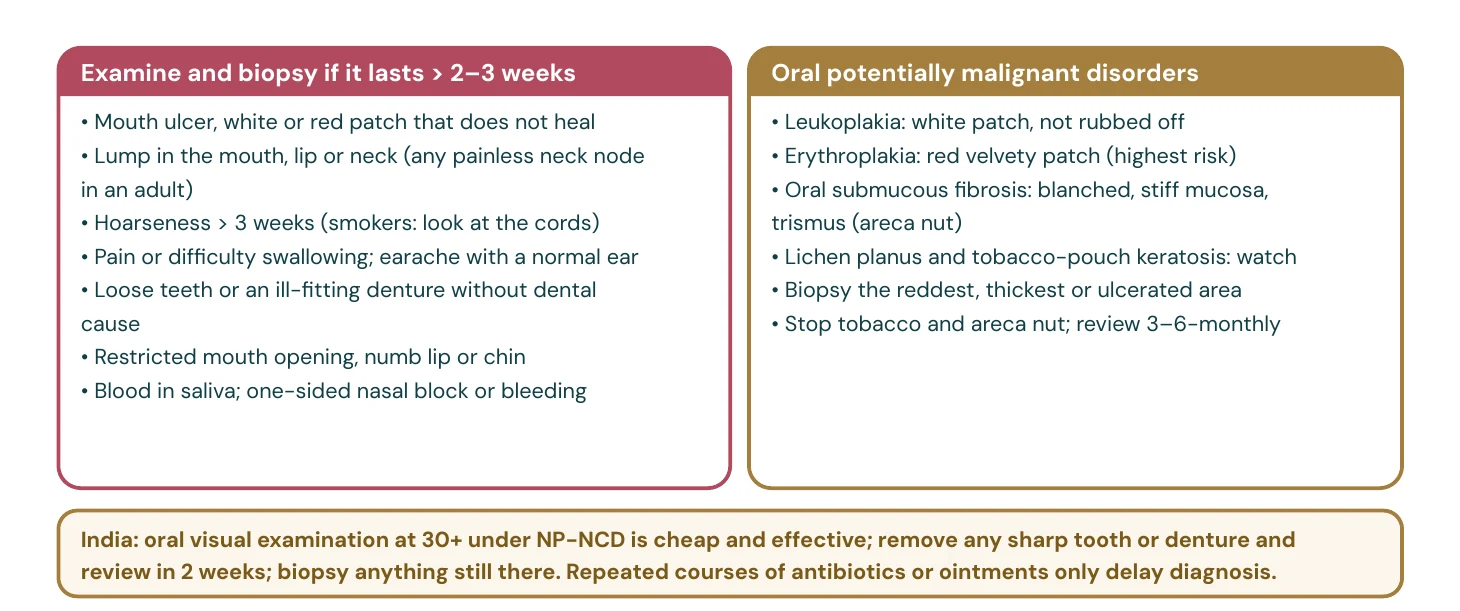
When to examine and biopsy
Figure 3. When to examine and biopsy. Most delays in India happen before the first biopsy: ulcers treated with ointments, neck nodes treated as TB, and hoarseness treated as a cold.
  • The two-week rule: any ulcer, patch or lump in the mouth that persists 2 weeks after removing an obvious irritant needs a biopsy. Repeated courses of antibiotics, antifungals or ointments only buy the tumour time.
  • "Oral TB" and "TB lymphadenitis": tuberculosis of the tongue and neck exists, but a hard, painless node in a tobacco user is cancer until FNAC says otherwise. Start antituberculous treatment only on microbiological or histological proof.
  • Trismus in an areca nut chewer may be oral submucous fibrosis, a cancer in the masticator space, or both. Examine carefully and image if mouth opening is falling or one-sided.
  • Second primary cancers: field cancerisation means up to 1 in 5 survivors develops another tobacco- or alcohol-related tumour (head and neck, oesophagus, lung). Examine the whole upper aerodigestive tract at diagnosis.
  • HPV-positive cancer is not only for the young non-smoker: it also occurs in older people and in smokers, and heavy smoking (more than about 10 pack-years) erodes its better prognosis (Gillison 2012 [7]).
03 Screening, workup & staging essentials

Screening

  • There is no screening test for pharyngeal or laryngeal cancer. For the mouth, visual oral examination works: in the Kerala cluster-randomised trial (over 190,000 people aged 35+, three rounds by trained health workers), screening reduced oral cancer deaths by 27% overall and by 29% in tobacco or alcohol users, despite real-life compliance (Sankaranarayanan 2005 [8]). India's NP-NCD programme offers it from age 30.
  • Opportunistic screening costs nothing: look in the mouth of every tobacco or areca nut user at every visit, including under dentures, and teach the 2-minute self-check (see the patient handout).
  • Oral brush cytology, toluidine blue and autofluorescence devices do not replace a biopsy of a suspicious lesion. No drug prevents oral cancer in people with leukoplakia: retinoids and other agents tried in trials are not recommended outside studies.

Workup before treatment

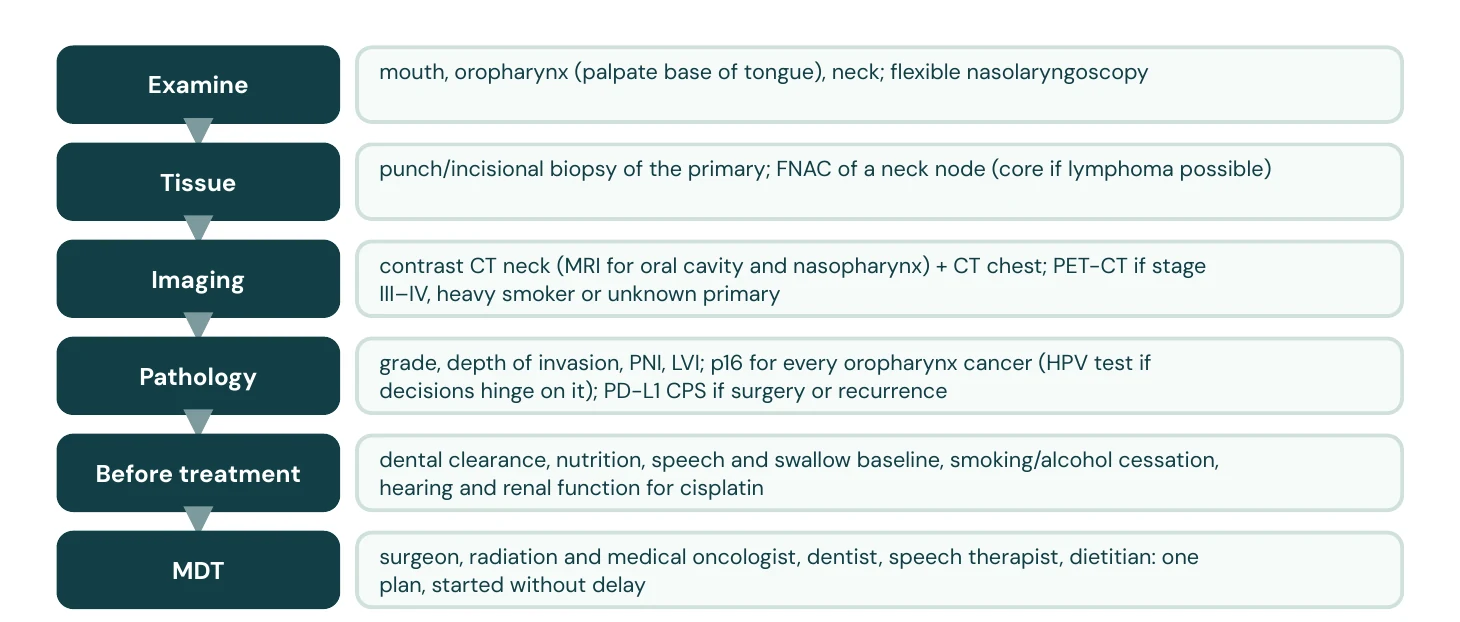
From suspicion to a treatment plan
Figure 4. From suspicion to a treatment plan. Biopsy before imaging is fine for an obvious oral lesion, but image before biopsy for deep or laryngeal tumours so the scan is not distorted; never excise a neck node without first looking for a primary.
StepWhat to doWhy
ExaminationInspect and palpate the mouth and oropharynx; flexible nasolaryngoscopy; examination under anaesthesia when the extent is unclearDefines T; looks for synchronous second primaries
BiopsyPunch or incisional biopsy of the primary; FNAC of a node (core or excision only after the primary search when lymphoma is a question)Open neck-node biopsy before definitive treatment can worsen control
Imaging of the primary and neckContrast CT (bone, larynx cartilage) or MRI (oral tongue, soft tissue, perineural spread, nasopharynx)Depth, bone invasion, ENE, retropharyngeal nodes
Distant stagingCT chest for all; PET-CT for stage III–IV, heavy smokers and unknown primaryLung metastases and second lung primaries; PET-CT also finds occult nodes
PathologyGrade, DOI, PNI, LVI, margins; p16 for every oropharynx cancer; PD-L1 CPS for resectable stage III–IVA and for recurrencep16 changes staging; CPS opens immunotherapy
FitnessPerformance status, nutrition, creatinine clearance, audiogram, comorbidity, social supportDecides cisplatin versus alternatives and the feasibility of 7 weeks of daily treatment
Dental and swallowingOPG, extractions, fluoride trays; speech and swallow baselinePrevents osteoradionecrosis and preserves function
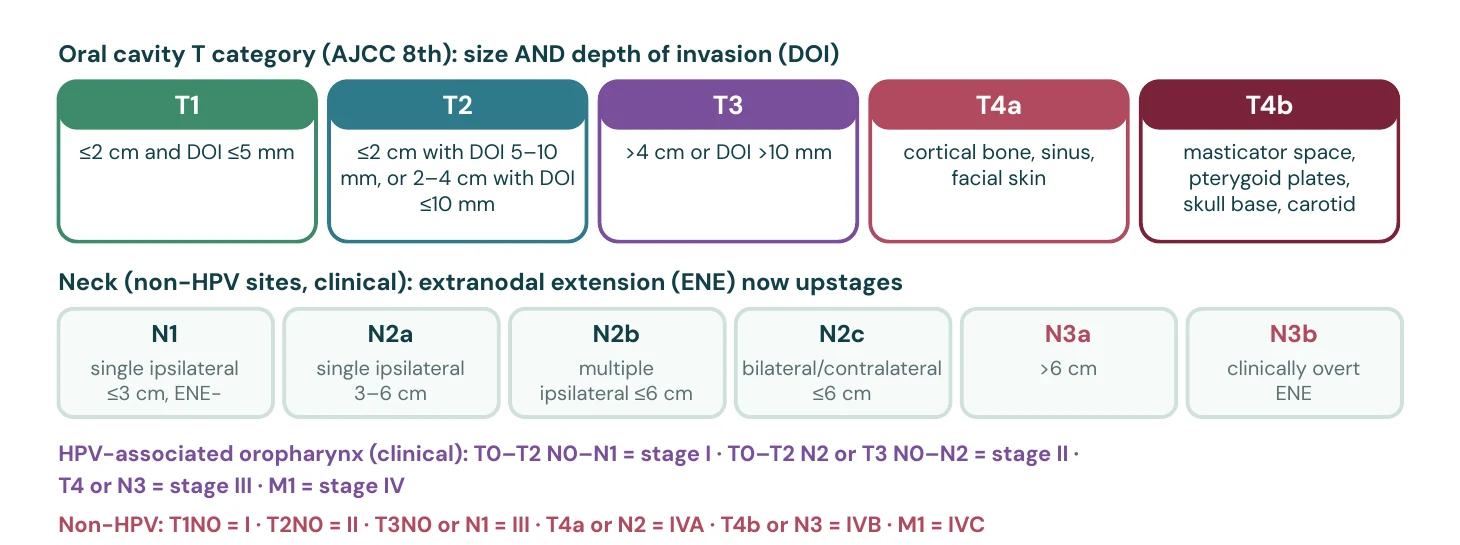
TNM at a glance (simplified from AJCC 8th edition)
Figure 5. TNM at a glance (simplified from AJCC 8th edition). Depth of invasion, not thickness, now sets the oral cavity T category; ENE moves a neck to N3b; HPV-associated oropharynx cancer has its own, kinder table.
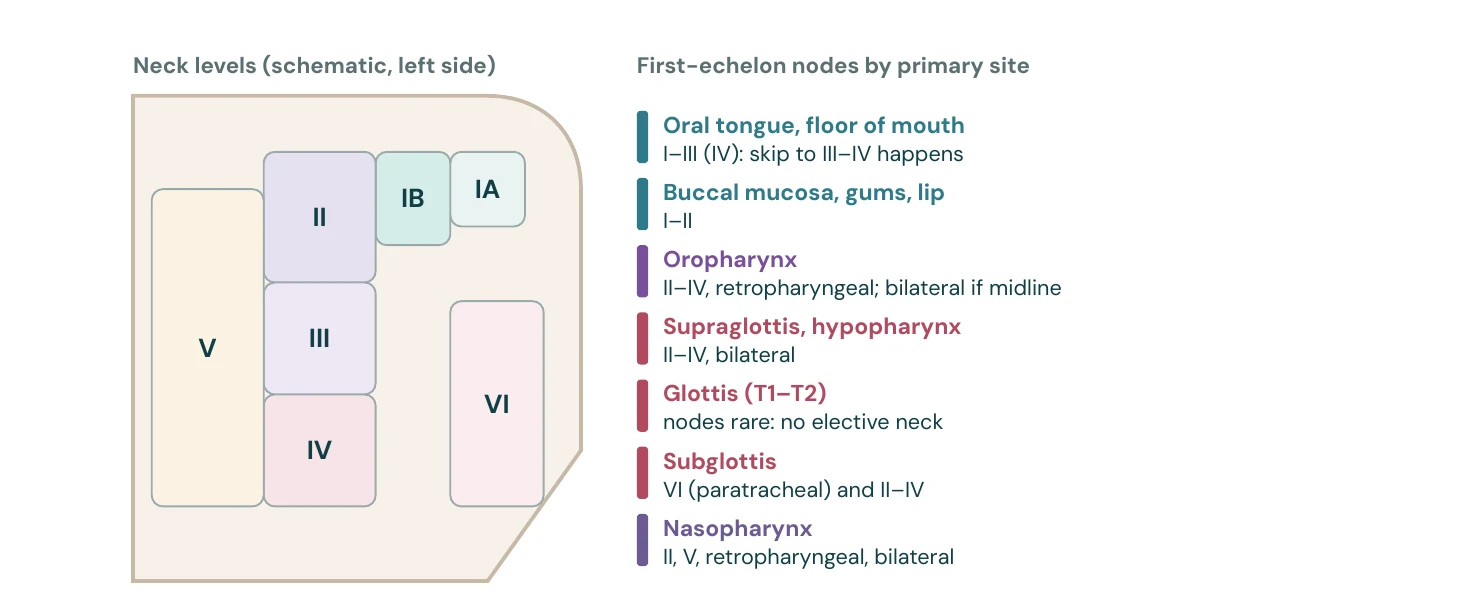
Where each site drains
Figure 6. Where each site drains. Levels II–IV carry most nodal disease; midline primaries (base of tongue, soft palate, supraglottis) need both sides of the neck treated.
  • Depth of invasion is measured from the basement membrane of adjacent normal mucosa, not tumour thickness. It sets the T category (DOI >5 mm = at least T2; >10 mm = T3) and predicts nodal spread: patients with nodal metastases had a mean DOI of 5.6 mm versus 3.8 mm in those without.
  • Mandible: bone invasion is hard to see before surgery. Edentulous jaws are invaded more easily (no tooth socket barrier); even minimal cortical invasion in an edentulous jaw usually needs a segmental resection.
  • Oropharynx: test p16 in every case; confirm HPV by DNA/RNA if the decision depends on it. Discordant results (p16+ but HPV−, or the reverse) have survival close to HPV-negative cancer (EPIC-OPC [9]).
  • Larynx: record vocal cord mobility (mobile, impaired, fixed), cartilage invasion on CT and subglottic extension; these decide T stage and whether larynx preservation is possible.
  • Unknown primary (squamous cancer in a neck node): p16 and EBER on the node, PET-CT before any biopsy under anaesthesia, then panendoscopy with bilateral tonsillectomy and directed biopsies; transoral lingual tonsillectomy finds many hidden base-of-tongue primaries. N1 without ENE: surgery or RT alone; N2b or more: chemoradiation to both necks and the likely mucosal sites.
  • PET-CT timing: after chemoradiation, wait 12 weeks; earlier scans give false positives.
04 Biomarkers that change treatment

In this section: HPV-associated versus HPV-negative cancer: a side-by-side guide · Biomarkers that change treatment

HPV-associated versus HPV-negative cancer: a side-by-side guide

HPV-driven and tobacco-driven squamous cancers of the oropharynx look alike under the microscope but are different diseases: different causes, molecular routes, patients, stage tables, prognosis and late-effect burden. The treatment backbone is still the same outside trials. This guide compares them point by point. HPV accounts for 70–80% of oropharyngeal cancer in North America and Europe; in India it is a minority (about 1 in 8 in the ConCERT trial), and many Indian HPV-positive patients also use tobacco.

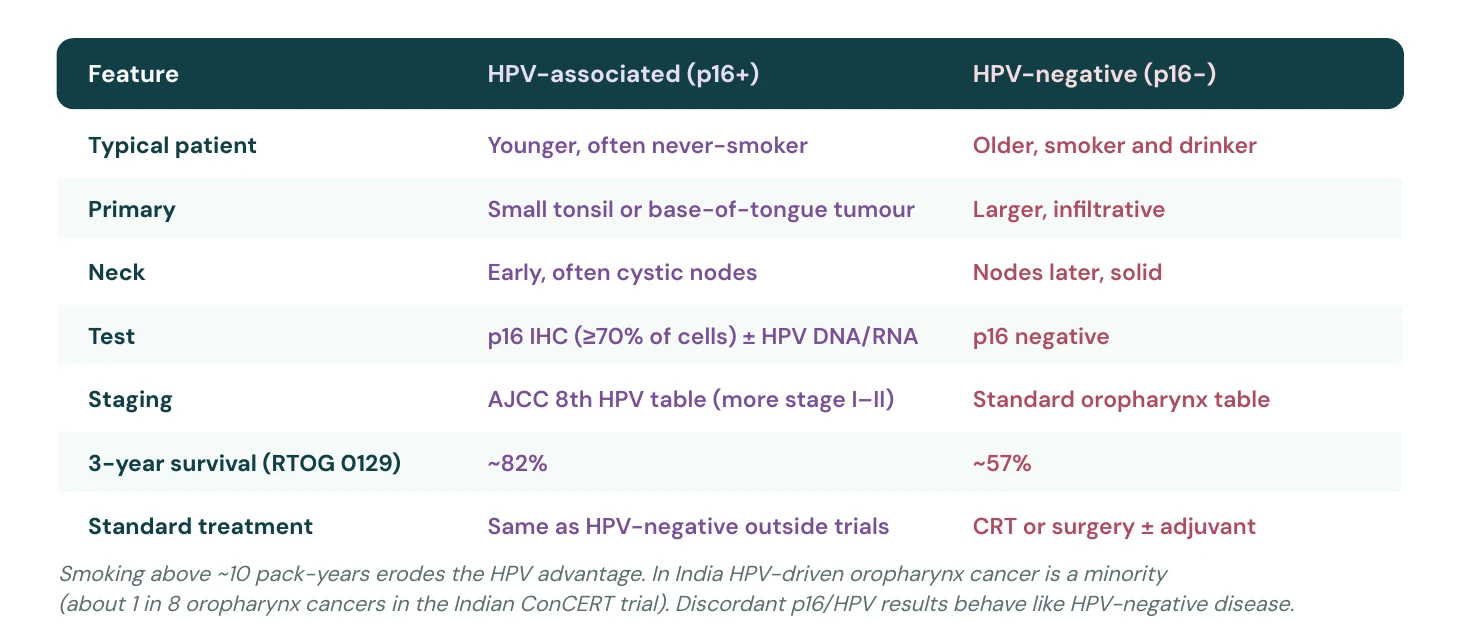
Two diseases in one site
Figure 7. Two diseases in one site. HPV status changes the stage and the prognosis but, outside trials, not the treatment; replacing cisplatin with cetuximab was worse in two randomised trials, and dose de-escalation remains investigational.

1. Molecular pathogenesis

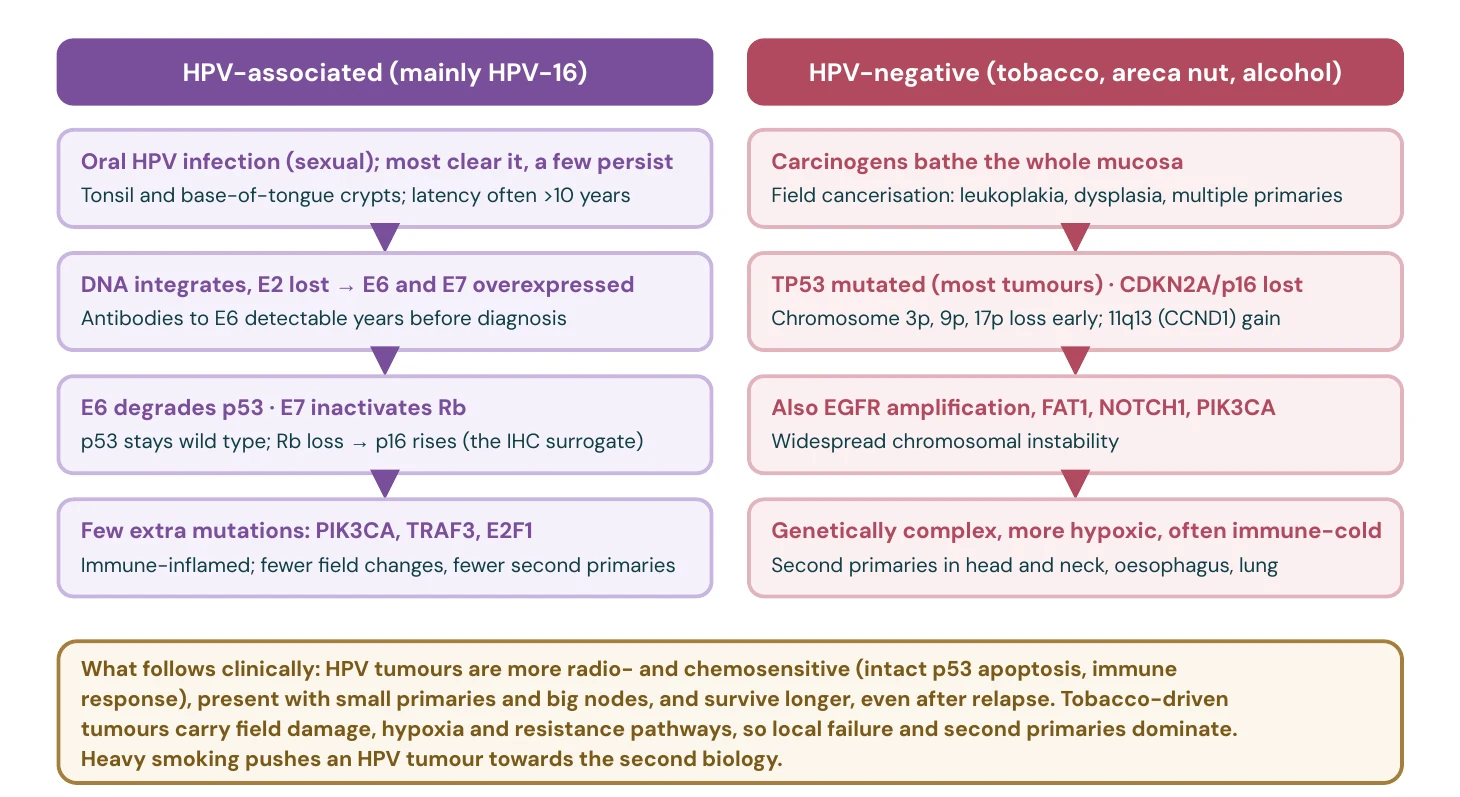
Two routes, two diseases
Figure 8. Two routes, two diseases. HPV oncoproteins switch off p53 and Rb without mutating them, which is why p16 rises; tobacco carcinogens mutate TP53 and delete CDKN2A across a damaged field (TCGA 2015; Slaughter 1953).
FeatureHPV-associatedHPV-negative (tobacco, areca nut, alcohol)
Cause and latencyPersistent oral infection with high-risk HPV (HPV-16 in most); acquired sexually, cancer usually >10 years later. E6 antibodies appear years before diagnosis.Carcinogen exposure over decades; risk rises with dose and falls slowly after stopping.
Where it startsReticulated crypt epithelium of the palatine and lingual tonsils (tonsil, base of tongue), where the basal layer is exposed.Any mucosal site; the whole exposed field (mouth, pharynx, larynx, oesophagus, lung) is at risk.
p53Protein degraded by viral E6; the TP53 gene is usually wild type.TP53 mutated in most tumours, often early (p53 IHC abnormal in dysplasia).
Rb and p16Rb inactivated by E7 → loss of feedback → p16 strongly over- expressed (hence p16 IHC as surrogate).CDKN2A (p16) deleted or silenced; Rb pathway activated through CCND1 (cyclin D1) amplification.
Other genomic changes (TCGA[10] 2015 [10])Fewer copy-number changes; PIK3CA mutation or amplification common; TRAF3 loss and E2F1 gain characteristic.Chromosome 3p, 9p and 17p loss and 11q13 gain; EGFR amplification, FAT1 and NOTCH1 loss; marked chromosomal instability.
Field cancerisationLimited; second primaries much rarer.Typical: dysplastic or genetically altered mucosa beyond the tumour explains synchronous and metachronous primaries (Slaughter 1953 [11], Braakhuis 2002 [12]).
Tumour microenvironmentOften T-cell inflamed; better oxygenated in many tumours.More hypoxic and immune-excluded; hypoxia is a key cause of radioresistance.
Why it respondsWild-type p53 can still trigger apoptosis after radiation; viral antigens attract immune attack.Mutant p53, hypoxia and repair pathways blunt radiation and chemotherapy.
Blood markerCirculating tumour HPV DNA is detectable and falls with treatment (research tool for surveillance).No validated blood marker.
  • How HPV transforms a cell: the circular viral genome usually integrates into host DNA at the E2 gene; losing E2 removes the brake on E6 and E7. E6 (with E6-associated protein) sends p53 for degradation, so damaged cells keep dividing and escape apoptosis; E7 releases E2F from Rb and inactivates p21 and p27, driving S-phase entry. Persistent E6/E7 expression is needed to keep the cancer growing.
  • Why p16 is a good surrogate: with Rb disabled, the cell over-produces p16 in a futile attempt to stop the cycle. In tobacco-driven cancer the opposite happens: CDKN2A is deleted, so p16 is low. That is why strong, diffuse p16 in an oropharyngeal cancer means HPV in most cases, but p16 outside the oropharynx often does not.
  • Why HPV cancers do better: intact (non-mutated) p53 still mediates radiation-induced apoptosis, tumours are often less hypoxic and are immunogenic (viral antigens). Smoking adds tobacco-type mutations and erodes this advantage (Gillison 2012 [7], MARCH-HPV [13]).
  • Field cancerisation in tobacco cancer: genetically altered clones spread laterally through the mucosa before invasion. This explains second primaries, local recurrences after "clear" margins, and why stopping tobacco matters even after cure.
  • Epidemiology of the virus: oral HPV DNA is found in about 7% of adults (HPV-16 in 1%), three times more often in men, and is linked to the number of oral sex partners (D'Souza 2007 [14], Gillison 2008 [15]). Most infections clear; long-term partners of patients are not at increased risk (oral HPV in 4%) (D'Souza 2014 [16]).

2. Clinical presentation, diagnosis and staging

FeatureHPV-associated oropharynxHPV-negative oropharynx
Age (ICON-S)Median 57 years; rising in older adultsMedian 61 years
SexAbout 84% menAbout 76% men
ExposuresOften never or light smokers; more sexual (including oral sex) partnersHeavy tobacco and alcohol; areca nut in India
First symptomPainless neck lump, often cystic; may be the only finding (unknown primary)Sore throat, odynophagia, referred otalgia, weight loss
Primary and nodes (7th ed.)Small primary (T1–T2 in 64%) with bulky nodes (N2–N3 in 69%)Larger primary (T1–T2 in 44%); N2– N3 in 51%
Other second cancersFewer synchronous (1 vs 9%) and metachronous (6 vs 13%) primariesField cancerisation: head and neck, oesophagus, lung
StagingAJCC 8th HPV table: most are stage I–II despite large nodes (ICON-S [17])Standard oropharynx table: most stage III–IV
Outcome after chemoradiation (RTOG 0129)8-year OS 71%; locoregional failure 20%8-year OS 30%; locoregional failure 52%
Distant metastasisAbout 10% (not significantly fewer); lung most commonAbout 16%
After relapseMedian survival 2.6 years (Fakhry 2014 [18])Median survival 0.8 years
  • The classic HPV presentation: a fit man in his 50s with a painless, often cystic level II node and a small or invisible tonsil or base-of-tongue primary. A "branchial cyst" in an adult is a metastasis until proven otherwise; never excise it before examining and imaging the pharynx.
  • Testing: p16 IHC on every oropharyngeal squamous cancer and every squamous neck node of unknown primary (strong, diffuse nuclear and cytoplasmic staining in ≥70% of cells; ASCO/CAP 2018 [19]). Confirm with HPV DNA or RNA (ISH or PCR) when the decision depends on it: about 10% of p16-positive tumours are HPV- negative, and discordant tumours have 5-year survival of 53–55% compared with 81% when both tests are positive (EPIC-OPC [9]). p16 on fine-needle aspirates is less sensitive (only a third met the threshold in one series): use a cell block or HPV PCR.
  • Do not test p16 routinely in oral cavity, laryngeal or hypopharyngeal cancer: HPV is present in a minority (about 11–17% in US data) and has no treatment implication there.
  • Staging: the AJCC 8th edition HPV table (from ICON-S [17]) down-stages node-positive disease: T1–T2 with ipsilateral nodes ≤6 cm is stage I. Explain this to patients: "stage I" with a large neck node is still treated with full curative intent, and the stage numbers cannot be compared with HPV-negative stages.
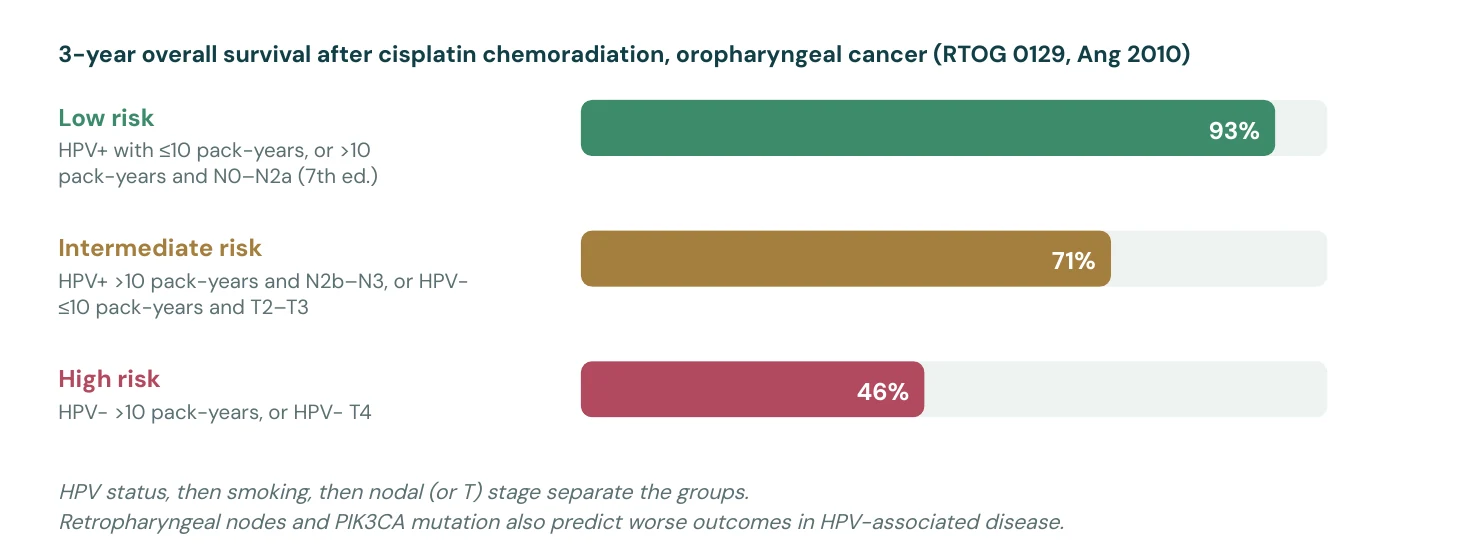
  • Prognostic groups: HPV status, pack-years and nodal stage define risk (Ang 2010 [20]); retropharyngeal nodes, PIK3CA mutation and continued smoking worsen outcome in HPV-associated disease.
HPV status and pack-years together predict outcome
Figure 9. HPV status and pack-years together predict outcome. These risk groups shaped de-escalation trials, which so far enrol mainly low-risk patients; outside trials, treatment is not reduced.

3. Management compared

SettingHPV-associatedHPV-negativeEvidence
T1–T2, N0 or a single node ≤3 cmRT alone (non-smoker, no adverse nodal features) or TORS + neck dissection; chemoradiation if smoker or adverse featuresRT or transoral/open surgery + neck dissection; adjuvant therapy more often neededORATOR [21], NCCN
Locoregionally advancedCisplatin chemoradiation; avoid trimodality (surgery then CRT)Cisplatin chemoradiation, or surgery + adjuvant RT/CRT when function allowsMACH-NC 2021[22]
RadiosensitiserCisplatin (weekly or 3-weekly). Cetuximab is worse: 5-year OS 78 vs 85%, 2-year OS 89 vs 98%, LRF 23 vs 9%Cisplatin; cetuximab not compared directly but weakerRTOG 1016 [23], De-[24] ESCALaTE HPV [24], ARTSCAN III[25]
Cisplatin-ineligibleCarboplatin-based or weekly docetaxel; RT alone if frailSamePatil 2023[26]
Perioperative immunotherapyNo reliable data: only about 4% of KEYNOTE-689 patients were HPV- positive, and NIVOPOSTOP had very fewPembrolizumab (CPS ≥1, resectable III–IVA) or nivolumab with postoperative cisplatin- RTKEYNOTE-689 [1], NIVOPOSTOP[2]
Postoperative high risk (ENE, positive margin)Cisplatin-RT remains standard; the benefit of adding cisplatin for ENE alone is debatedCisplatin-RT (± nivolumab)ECOG 3311 [27], EORTC 22931[28]
Treatment reductionInvestigational: lower adjuvant RT dose after TORS, reduced-dose CRT, RT alone in selected low-risk patients, induction- selected dose reduction, hypoxia-guided de-escalationNot applicableSee table below
Recurrent/metastaticSame systemic therapy; PD-1 inhibitors work regardless of HPV (nivolumab median OS 9.1 vs 4.4 months in p16+ in CheckMate 141). Resect or ablate isolated lung metastases in selected patients.Same systemic therapyKEYNOTE-048 [3], CheckMate 141[29]
SurveillanceSame schedule; ctHPV DNA promising (two consecutive positives predicted recurrence in 94%; negative predictive value ~100%) but not standardSame schedule; second- primary vigilance and lung CT for smokersChera 2020 [30], PET-NECK[31]
  • The rule outside trials: treat HPV-associated cancer by its stage and site with the same standard options as HPV-negative cancer; use cisplatin, not cetuximab; avoid trimodality treatment by choosing the route least likely to need it.
  • Choosing RT or TORS in early disease: both cure most patients. TORS suits small, accessible, lateralised primaries with limited nodal disease where pathology is unlikely to show ENE or positive margins; otherwise RT-based treatment avoids surgery followed by full chemoradiation.
  • Treatment de-escalation remains investigational; the trials below show both the promise (less toxicity) and the risk (more failures). Offer it only within a trial.
TrialDesignResultMessage
ECOG 3311[27]TORS, then risk-based adjuvant therapy; intermediate risk randomised to 50 vs 60 Gy3-year PFS 95 vs 94%; grade ≥3 toxicity 15 vs 25%; better quality of life with 50 Gy. Low risk (no adjuvant): PFS 97%Lower-dose adjuvant RT is promising after TORS
NRG-[32] HN002[32]Non/light smokers; 60 Gy RT alone (accelerated) vs 60 Gy + weekly cisplatin2-year PFS 88 vs 91%; locoregional failure 10 vs 3%; RT-alone arm missed its targetChemotherapy still matters at reduced dose
ORATOR[21]RT (± chemo) vs TORS + neck dissection (± adjuvant)3-year OS 87 vs 88%; swallowing QoL slightly better with RT; 71% of TORS patients still needed full-dose RTTORS did not reduce total treatment for most
ORATOR2Reduced-dose RT (60 Gy + cisplatin) vs TORS + reduced adjuvant RT2-year OS 100 vs 89%; closed early after two TORS-related deathsSurgical de-escalation carries its own risks
MC1273 [33]/ MC1675After surgery: 30–36 Gy twice daily + docetaxel vs 60 Gy + cisplatinLate grade ≥3 toxicity ~2 vs 7%; better swallowing; PFS 87 vs 95% (early)Less toxicity, possible loss of control
Chera[34] 2019[34]Single-arm: 60 Gy ± reduced- dose cisplatin, low-smoking patients2-year PFS 86%, OS 95%; no grade ≥3 events reported; no permanent feeding tubesHypothesis-generating
E1308, OPTIMAInduction chemotherapy, then RT dose by responseGood control in low-risk (<10 pack- years, ≤T3/N2b); toxicity rose with RT doseResponse-adapted dosing is investigational
Lee 2024[35]Hypoxia PET selects non-hypoxic tumours for lower doseFeasible with high control in a phase II studyBiology-guided selection under study

4. Toxicity and survivorship compared

IssueHPV-associatedHPV-negative
Who carries the burdenYounger patients who will usually be cured: decades of living with late effects (dysphagia, xerostomia, fibrosis, osteoradionecrosis, hearing loss)Older patients with more comorbidity; non-cancer deaths and second cancers compete with late effects
Acute toxicitySame as for any oropharyngeal chemoradiation; cetuximab swaps hearing, kidney and GI toxicity for skin and infusion reactions, without being safer overallSame; poorer baseline nutrition and lung function in heavy smokers
SwallowingAvoid trimodality treatment; DO-IMRT and swallow exercises; de-escalation trials report better swallowingLate dysphagia and aspiration more often; continued smoking and alcohol worsen them
Jaw and teethOsteoradionecrosis risk after oropharyngeal IMRT remains real; dental care for lifeSame, often with poorer dentition at baseline
Second primariesUncommonUp to 1 in 5 survivors; lung CT if ≥20 pack-years
PsychosocialAnxiety about a sexually transmitted cause, partners and disclosure; reassure with factsStigma of tobacco and alcohol; addiction support
Follow-up lengthLate recurrences and late effects justify long follow-up; ctHPV DNA under studyIntensive for 2–3 years, then lifelong for second primaries
  • What to tell patients and partners: HPV is very common and most people clear it; the cancer is not caught by kissing or ordinary contact; long-term partners do not need special tests, and studies have not found them to be at increased risk. HPV vaccination of children (girls and boys where available) before sexual debut prevents infection with cancer-causing types.
  • Prevention: a nine-valent vaccine is approved in the US for preventing HPV-associated oropharyngeal cancer, and vaccinated young adults have far less oral HPV infection. India now has its own HPV vaccine and a programme for adolescent girls (Dr. Haritha to confirm current scope).
  • Indian practice: test p16 in every oropharyngeal cancer (it changes stage and counselling), but do not de- escalate; many p16-positive Indian patients smoke or chew tobacco and belong to the intermediate-risk group.
  • HPV outside the oropharynx: p16 or HPV positivity in oral cavity, larynx or hypopharynx may carry a modestly better prognosis but has no treatment implications.

Biomarkers that change treatment

  • p16/HPV is the only biomarker that changes staging. In RTOG 0129, 3-year survival was about 82% with HPV- positive and 57% with HPV-negative oropharynx cancer (Ang 2010 [20]). Outside trials it does not change treatment: replacing cisplatin with cetuximab was worse in RTOG 1016 [23](5-year OS 78 vs 85%) and De-[24] ESCALaTE HPV [24](2-year OS 89 vs 98%). p16 outside the oropharynx is common and does not mean HPV-driven cancer; do not test oral cavity or larynx routinely.
  • PD-L1 combined positive score (CPS) counts PD-L1-staining tumour cells, lymphocytes and macrophages per 100 tumour cells (22C3 assay). CPS ≥1 opens perioperative pembrolizumab and first-line pembrolizumab; CPS ≥20 identifies those who can have pembrolizumab alone (KEYNOTE-048 [3]).
  • Pathological risk features are the biomarkers that decide adjuvant therapy most often: positive margins and extranodal extension (chemoradiation) versus pT3–T4, multiple nodes, perineural and lymphovascular invasion (RT alone).
  • EGFR is overexpressed in most head and neck cancers, but its level does not predict benefit from cetuximab and is not tested.
  • Not useful in routine practice: tumour mutational burden, HRAS, PIK3CA and other NGS findings outside trials; serum markers (SCC antigen, CYFRA 21-1) for diagnosis or follow-up.
  • Biology explains radioresistance: tumour hypoxia (well-oxygenated cells are 2.5–3 times more radiosensitive), rapid repopulation during gaps, continued smoking and low haemoglobin. Hypoxic sensitisers such as nimorazole improved locoregional control in a meta-analysis (Overgaard 2011 [36]) but are not used widely; erythropoiesis-stimulating agents worsened outcomes (DAHANCA 10 [37]).
05 Local therapy: surgery & radiotherapy

Surgery

What the head and neck surgeon offers
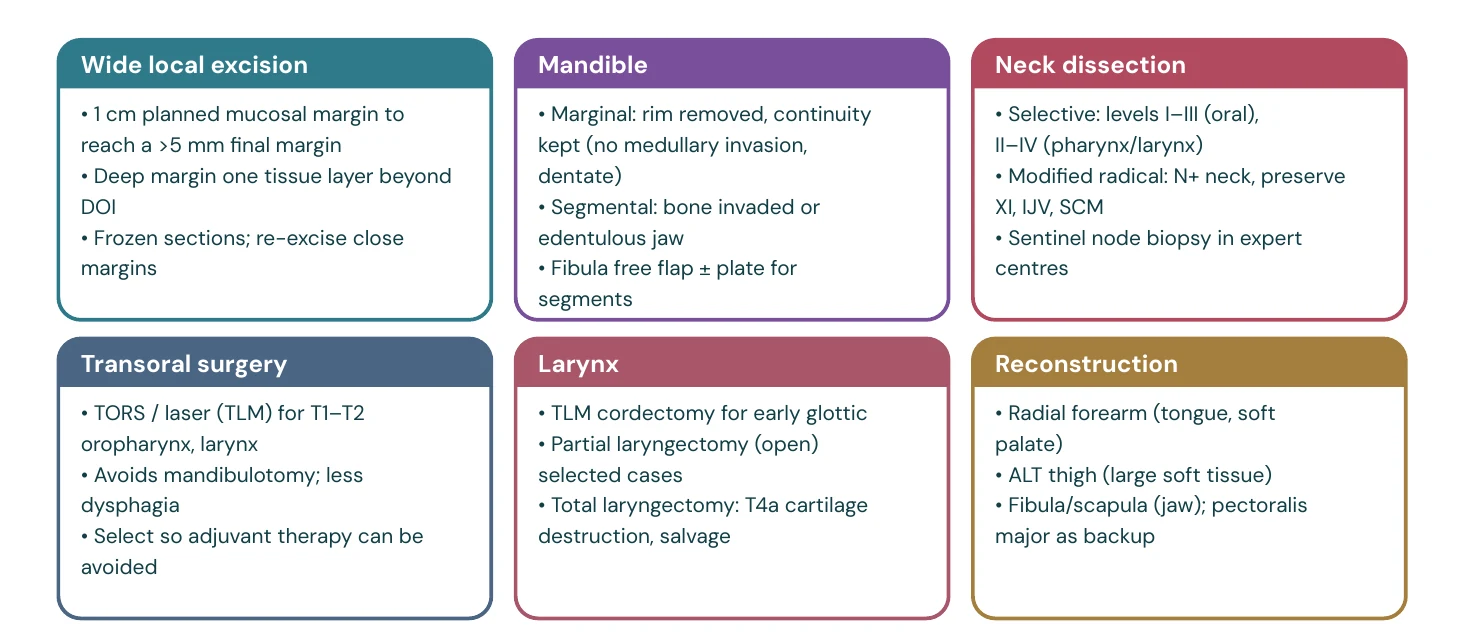
Figure 10. What the head and neck surgeon offers. Margin status and extranodal extension on the final pathology decide adjuvant therapy, so the operation and the reconstruction are planned with the radiation oncologist from day one.
  • Oral cavity: surgery first for almost every resectable tumour; it gives pathological staging (DOI, margins, nodes) and causes less long-term morbidity than radiotherapy to the mouth. Plan a 1 cm mucosal margin to reach a final margin >5 mm; re-excise close (<2 mm) or involved margins in early disease rather than relying on RT.
  • Elective neck dissection in the clinically node-negative neck: in a Tata Memorial trial of 500 patients with early oral cancer (mostly tongue), elective dissection improved 3-year survival from 67.5% to 80% and disease-free survival from 45.9% to 69.5% compared with watch-and-wait (D'Cruz 2015 [38]). The benefit was clearest with DOI >3 mm. Selective dissection of levels I–III (IV for tongue) is standard.
  • Sentinel node biopsy is an alternative in expert centres for T1–T2 cN0 tumours: in Senti-MERORL [39], 5- year neck control and survival matched elective dissection, with less shoulder morbidity. Less reliable for floor of mouth.
  • Neck by site: tongue and floor of mouth DOI >3 mm → elective neck (bilateral if near the midline); DOI ≤1 mm and lateralised → observe; 1–3 mm → SLNB or elective dissection; T1 lower lip → observe; buccal, gingiva, retromolar trigone, hard palate → elective dissection.
  • Buccal mucosa: deceptively easy-looking but hard to clear; the buccal space allows early deep spread to skin. Reconstruct the cheek lining (free flap for all but the smallest defects) or severe trismus follows; jaw exercises are part of treatment.
  • Mandible: marginal mandibulectomy keeps continuity when tumour abuts but does not enter medullary bone; segmental resection for invasion, reconstructed with a vascularised fibula (or scapula) and plate. Primary reconstruction is standard; an anterior defect left unreconstructed causes the "Andy Gump" deformity.
  • Transoral surgery (robotic, TORS, or laser, TLM) for selected T1–T2 oropharynx and supraglottic cancers avoids mandibulotomy. Choose it only when margins are likely clear and adjuvant chemoradiation unlikely; triple-modality treatment is the worst outcome for swallowing. In ORATOR [21]swallowing quality of life at 1 year was slightly better after RT than after TORS with neck dissection, below the clinically meaningful threshold.
  • Larynx: transoral laser cordectomy for early glottic cancer; open partial laryngectomy for selected cases; total laryngectomy for T4a with cartilage destruction or a non-functional larynx, and for salvage. Voice after laryngectomy: tracheo-oesophageal puncture with voice prosthesis, electrolarynx or oesophageal speech.
  • Neck in oropharynx/larynx: levels II–IV (bilateral for midline primaries); comprehensive dissection for N2– N3; glottic T1–T2: no elective neck.
  • Reconstruction choices: radial forearm (tongue, floor of mouth, soft palate), anterolateral thigh (large soft- tissue defects), fibula or scapula (mandible, maxilla), pectoralis major as a robust regional flap. Free-flap success rates are 93–99% in experienced hands.

Larynx and hypopharynx surgery: types, pros and cons, outcomes

The operation is chosen by tumour extent, cord mobility, cartilage invasion, lung function (partial operations mean some aspiration while swallowing is relearnt) and the patient’s priorities for voice, swallowing and the stoma. Organ preservation with chemoradiation and these operations are complementary: a surgeon able to offer salvage surgery must be part of the plan from the start.

Transoral laser cordectomyREMOVESTumour on the vocal cord, throughthe mouthKEEPSRest of the larynx; no neck wound;no tracheostomyGlottic Tis–T1 (selected T2)Supraglottic laryngectomyREMOVESEpiglottis and false cords (abovethe vocal cords)KEEPSBoth vocal cords and the naturalvoiceSupraglottic T1–T2; good lungfunctionVertical partial laryngectomyREMOVESOne side of the larynx with itscartilageKEEPSThe other cord; natural airwayafter healingSelected T1–T2 glottic when laseraccess is poorSupracricoid laryngectomyREMOVESBoth cords and the thyroidcartilageKEEPSCricoid and at least onearytenoid; no permanent stomaSelected T2–T3, limited T4a; expertcentresTotal laryngectomyREMOVESWhole larynx; trachea brought outas a neck stomaKEEPSSwallowing; speech with a voicevalveT4a, dead larynx, salvage after RTTotal laryngopharyngectomyREMOVESLarynx and the surrounding pharynxKEEPSSwallowing via a flap or jejunumtubeAdvanced hypopharynx andpost-cricoid cancerTissue removedCartilage keptReconstruction (flap or jejunum)Stoma with voice valvePexy
Figure 11. Larynx and hypopharynx operations, from least to most (schematic, front view). Partial operations keep the voice and natural airway but need good lung function and swallowing rehabilitation; total laryngectomy and laryngopharyngectomy give the best local control for destroyed or non-functioning organs at the cost of a permanent stoma.
ProcedureBest suited toAdvantagesDisadvantagesOutcomes and function (approximate, from surgical series)
Transoral laser cordectomy (TLM)Glottic Tis–T1, selected T2; good laryngeal exposureSingle short admission; no neck wound or tracheostomy; can be repeated; keeps RT in reserveNeeds a good view of the whole tumour; anterior commissure involvement raises recurrence; deeper cordectomy gives a breathier voiceT1 local control about 85–95%, larynx preservation above 95% with salvage; voice similar to RT after superficial cordectomy, poorer after deep resection
Vertical partial laryngectomy (open)Selected T1–T2 glottic when laser access is poorNatural voice and airway kept; complete pathologyTemporary tracheostomy; rough voice; largely replaced by laser surgery and RTLocal control comparable to RT in selected series; most patients decannulated
Supraglottic laryngectomy (transoral or open)Supraglottic T1–T2 (selected T3 with pre-epiglottic spread), mobile cords, good lung functionKeeps normal voice; one-stage treatment of the primary and neckEarly aspiration while swallowing is relearnt; bilateral neck dissection needed; often adjuvant RTLocal control about 85–90% for T1–T2; most return to an oral diet after swallow rehabilitation
Supracricoid partial laryngectomy (CHP/CHEP)Selected T2–T3 and limited T4a glottic or supraglottic; at least one mobile arytenoid; no major subglottic extension; FEV1 adequateAvoids a permanent stoma; preserves speech and swallowingRough, breathy voice; temporary tracheostomy and feeding tube; aspiration pneumonia risk; long rehabilitation; needs an expert teamLocal control about 90% or more in experienced series; most patients decannulated and eating by mouth within weeks to months
Total laryngectomy + voice prosthesisT4a with cartilage destruction or extralaryngeal spread; non-functioning larynx; salvage after RT/CRTBest local control for destroyed larynx; no aspiration; swallowing usually goodPermanent stoma; loss of natural voice and smell; pharyngocutaneous fistula; stoma and humidifier care; social impactFluent tracheo-oesophageal speech in roughly 70–90%; fistula about 10–20% after primary surgery and up to about 30% after salvage (a muscle or free flap onlay lowers it)
Total laryngopharyngectomy (± oesophagectomy) with free jejunum, tubed flap or gastric pull-upAdvanced hypopharynx and post-cricoid cancer; salvageRemoves bulky disease; reconstruction restores swallowing in mostMajor surgery; fistula, stricture, flap failure; adjuvant RT usually needed; voice by prosthesisMost resume an oral diet; strictures in a minority need dilatation; long-term survival limited by distant spread in advanced hypopharyngeal cancer
Partial pharyngectomy (transoral or open)Selected small pyriform sinus or posterior pharyngeal wall tumoursLarynx preservedFew suitable patients; usually followed by RTGood local control in selected early tumours; function similar to RT alone
  • Comparing routes for early glottic cancer: laser surgery and RT give similar local control and laryngeal preservation; laser is one short procedure and keeps RT for later, RT avoids anaesthesia and suits anterior commissure tumours. Choose with the patient by access, voice needs and travel.
  • Larynx preservation versus total laryngectomy for T3: survival is similar (VA Larynx[40], RTOG 91-11[41]; for the pyriform sinus, EORTC 24891[42]); for T4a with cartilage destruction, or a larynx that no longer protects the airway, laryngectomy gives better results.
  • Voice after laryngectomy: a tracheo-oesophageal voice prosthesis (primary or secondary puncture) is the most natural option; electrolarynx and oesophageal speech are alternatives. Speech therapy should meet the patient before surgery.
  • Figures in this table are approximate ranges from surgical series and guidelines, given for counselling; outcomes depend heavily on case selection and the experience of the team. Flagged for Dr. Haritha’s review.

Radiotherapy

Radiotherapy schedules (illustrative)
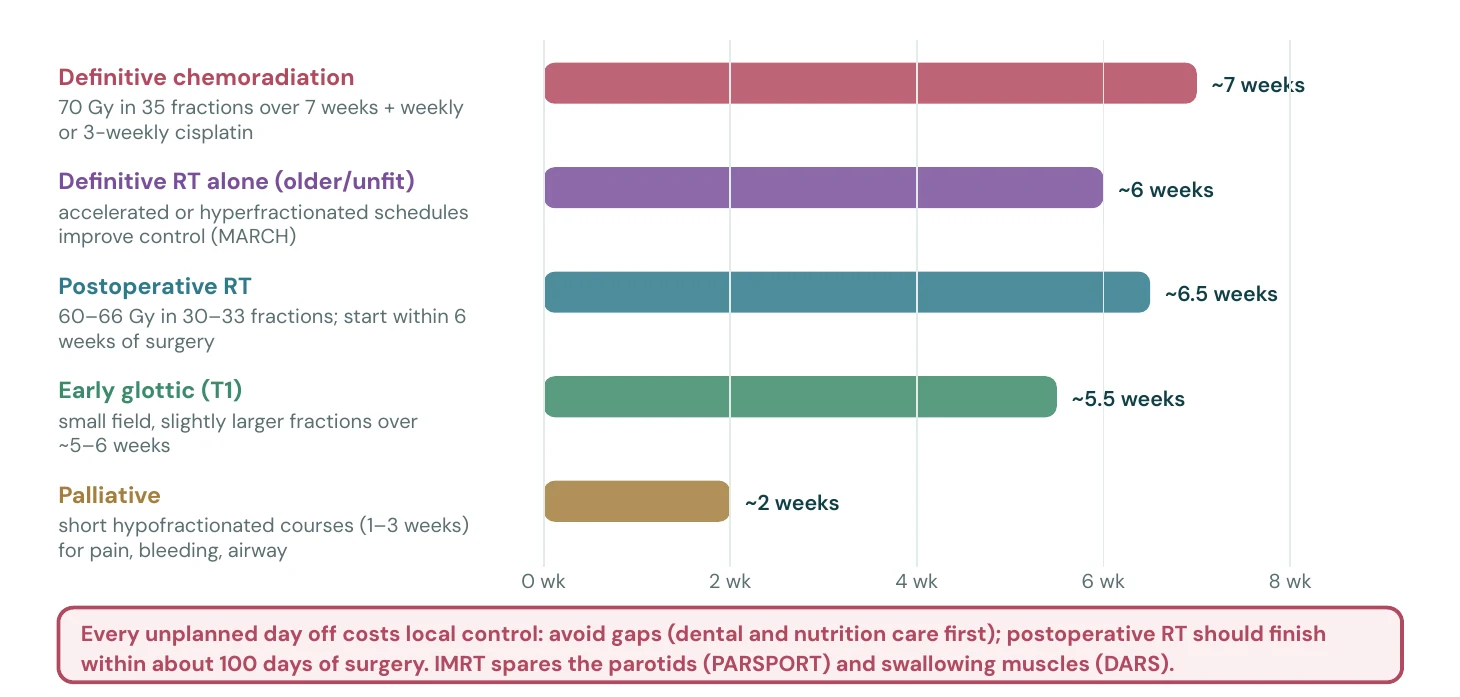
Figure 12. Radiotherapy schedules (illustrative). Head and neck squamous cancers repopulate fast during treatment gaps, so time matters as much as dose.
  • IMRT is standard: it spared salivary function compared with conventional RT in randomised trials, including a Tata Memorial trial (PARSPORT [43], Gupta 2012 [44]); dysphagia-optimised IMRT improved patient-reported swallowing (DARS [45]). Daily image guidance allows tighter margins.
  • Altered fractionation without chemotherapy improves survival over standard RT (hyperfractionation most; MARCH [46], Bourhis 2006 [47]), but does not replace concurrent chemotherapy; with cisplatin, give once- daily RT.
  • Time matters: start postoperative RT within 6 weeks and finish within about 100 days of surgery (Ang[48] 2001 [48]); avoid gaps during definitive RT. Continued smoking during RT lowers response and survival.
  • Definitive RT for oral cancer is reserved for those who cannot have surgery: it controls the primary less well and carries a higher risk of osteoradionecrosis. Brachytherapy boosts suit small, accessible tumours in experienced centres.
  • Glottic T1: small-field RT with slightly larger fractions gives local control comparable to laser surgery and spares the other cord; altered fractionation improves control. Supraglottic and subglottic tumours need bilateral elective nodal RT.
  • After definitive (chemo)RT: clinical review at 4–6 weeks, PET-CT at 12 weeks; neck dissection only for residual disease or an unequivocally positive PET. In PET-NECK [31](564 patients with N2–N3 disease), PET- CT surveillance gave the same 2-year survival as planned neck dissection and avoided most operations. Salvage surgery for residual primary disease.
  • Protons may spare normal tissue further (lower feeding-tube rates in one trial) but are costly and not standard.
  • Re-irradiation for recurrence or a second primary in an irradiated field: salvage surgery first if possible; postoperative re-irradiation only for high-risk pathology; re-irradiation with chemotherapy (or SBRT) for selected unresectable recurrences at experienced centres. Treatment deaths approach 10% and severe toxicity up to 50%: select carefully by prior dose, interval, volume and fitness.
06 Systemic therapy: indications & options

In this section: Nasopharyngeal carcinoma · Quick-reference tables

Indications and options only; no doses. Benefits are given in absolute terms where possible. Trial names link to the primary publications.

Chemotherapy with radiotherapy (locally advanced disease)

Three routes for locally advanced disease
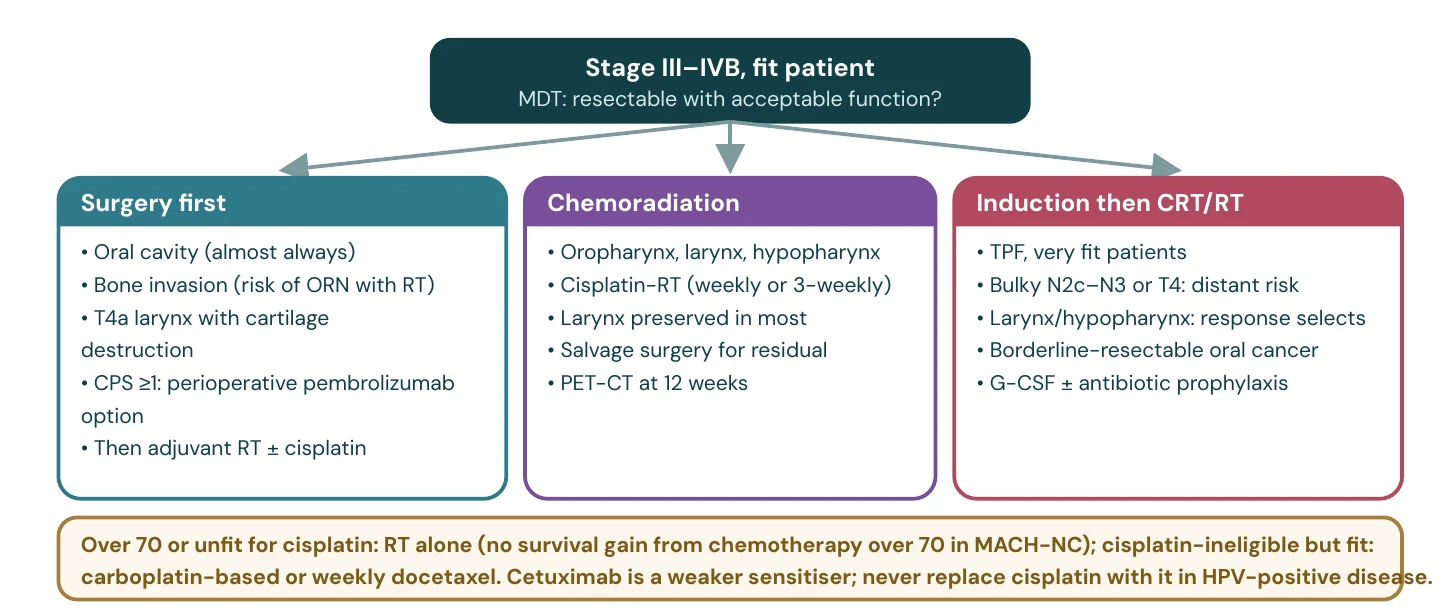
Figure 13. Three routes for locally advanced disease. Concurrent chemoradiation adds about 6.5% absolute 5-year survival over radiotherapy alone (MACH-NC); the choice of route is about function as much as cure.
  • Concurrent chemoradiation improved overall survival over RT or surgery alone in 71 trials (10,680 patients): absolute gain 6.5% at 5 years, 3.6% at 10 years, from fewer locoregional failures (MACH-NC 2021 [22]). There was no benefit over age 70 (HR 0.97); RT alone is usual for older or frail patients.
  • Cisplatin is the sensitiser, weekly or every 3 weeks, aiming at a cumulative dose of at least 200 mg/m². In the Indian ConCERT trial (270 patients, mostly oropharynx), weekly cisplatin had non-inferior locoregional control with less severe mucositis (41 vs 54%) and kidney injury (4 vs 18%). Earlier, a Tata Memorial trial using a lower weekly dose found 3-weekly cisplatin better in the postoperative oral cavity setting (Noronha[49] 2018 [49]); weekly dosing must be full-dose to work.
  • Cisplatin-ineligible (creatinine clearance <50 mL/min, hearing loss, neuropathy, ECOG 2, >10% weight loss): in a Tata Memorial trial of 356 such patients, adding weekly low-dose docetaxel to RT improved 2-year overall survival from 42% to 51% and DFS from 30% to 42%, with more mucositis (Patil 2023 [26]). Carboplatin-based regimens are alternatives.
  • Cetuximab with RT beat RT alone (3-year OS 55 vs 45%; Bonner 2006 [50], 5-year update [51]) but is inferior to cisplatin (RTOG 1016 [23], De-ESCALaTE HPV [24], ARTSCAN III [25]), adds nothing to cisplatin-RT (RTOG 0522 [52]) and is not used with RT in older or frail patients.
  • Induction chemotherapy (TPF) beat PF in TAX 324 [53](5-year OS 52 vs 42%) and TAX 323 [54](median 18.8 vs 14.5 months), but adding induction to chemoradiation did not improve survival in PARADIGM [55]or DeCIDE [56]. Use it selectively: larynx/hypopharynx preservation (response selects patients for RT), bulky N2c–N3 disease, borderline-resectable oral cancer, or when RT will be delayed. Neutropenia is frequent: G- CSF and/or antibiotic prophylaxis.
  • Larynx preservation: in the VA Larynx [40]trial (332 patients), induction cisplatin–5FU then RT in responders gave the same 2-year survival as laryngectomy (68%) and preserved the larynx in 64%; EORTC[42] 24891 [42]showed the same for pyriform sinus cancer. In RTOG 91-11 [41](547 patients), both concurrent cisplatin-RT and induction then RT improved 5-year laryngectomy-free survival over RT alone (47 and 44 vs 34%); concurrent therapy gave the best locoregional control (68 vs 55%), but 10-year survival trended lower (28 vs 39% with induction), suggesting more non-cancer deaths (long-term report [57]). After TPF induction, cisplatin- or cetuximab-RT gave similar larynx preservation in TREMPLIN [58]. T4a tumours with gross cartilage destruction, both cords destroyed or a non-functioning larynx do better with laryngectomy.
  • Checkpoint inhibitors added to definitive chemoradiation have failed: avelumab (JAVELIN Head and[59] Neck 100 [59]), pembrolizumab (KEYNOTE-412) and pembrolizumab instead of cetuximab with RT in cisplatin-unfit patients (PembroRad [60]).

Immunotherapy around surgery

  • Perioperative pembrolizumab (KEYNOTE-689 [1]): in resectable stage III–IVA oral cavity, larynx, hypopharynx or HPV-negative oropharynx cancer, two neoadjuvant doses before surgery and pembrolizumab with and after postoperative RT (± cisplatin) improved 3-year event-free survival (about 60 vs 46% in CPS ≥1; HR 0.73 overall). Overall survival is immature and pathological complete response was only about 3%. About 60% had oral cavity cancer. Benefit was confined to CPS ≥1.
  • Nivolumab with postoperative chemoradiation (NIVOPOSTOP [2]): after resection with high-risk features (ENE, involved margin, ≥4 nodes or multiple PNI), adding nivolumab to cisplatin-RT and then 6 months of nivolumab improved 3-year DFS (63 vs 53%; HR 0.76) through better locoregional control, regardless of PD- L1. Grade ≥3 toxicity 74 vs 68%. Very few HPV-positive patients: use only for HPV-negative disease. OS immature.
  • These two strategies have not been compared; choose one per patient (pembrolizumab started before surgery continues after it). Cost limits access in India: discuss trial and assistance programmes openly.

Adjuvant therapy after surgery

Adjuvant treatment follows the pathology report
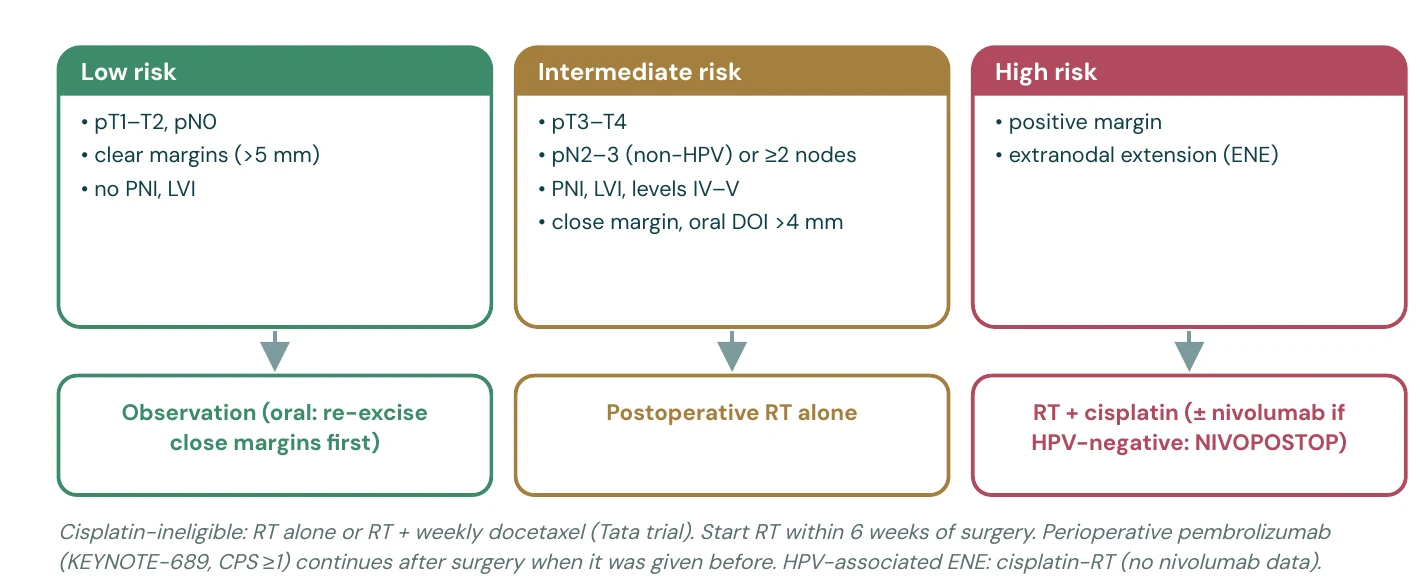
Figure 14. Adjuvant treatment follows the pathology report. Only positive margins and extranodal extension benefited from adding cisplatin in both EORTC 22931 and RTOG 9501.
  • In EORTC 22931 [28], adding cisplatin to postoperative RT improved 5-year overall survival from 40% to 53%; in RTOG 9501 [61]locoregional control improved but survival did not. A pooled analysis showed the benefit was confined to positive margins and extranodal extension (Bernier 2005 [62]; RTOG 9501 at 10[63] years [63]).
  • Weekly cisplatin with postoperative RT was non-inferior to 3-weekly and less toxic in JCOG1008 [64](3-year OS 72 vs 59%; less neutropenia, hearing loss and kidney injury).
  • Intermediate-risk features (pT3–T4, ≥2 nodes without ENE, PNI, LVI, levels IV–V, close margins) → RT alone; cetuximab with RT improved DFS but not OS and doubled late severe toxicity.
  • Early oral cancer: re-excision for close or involved margins rather than RT; RT for pN+ disease, bone invasion and DOI >4 mm with other risk features.

Recurrent or metastatic disease

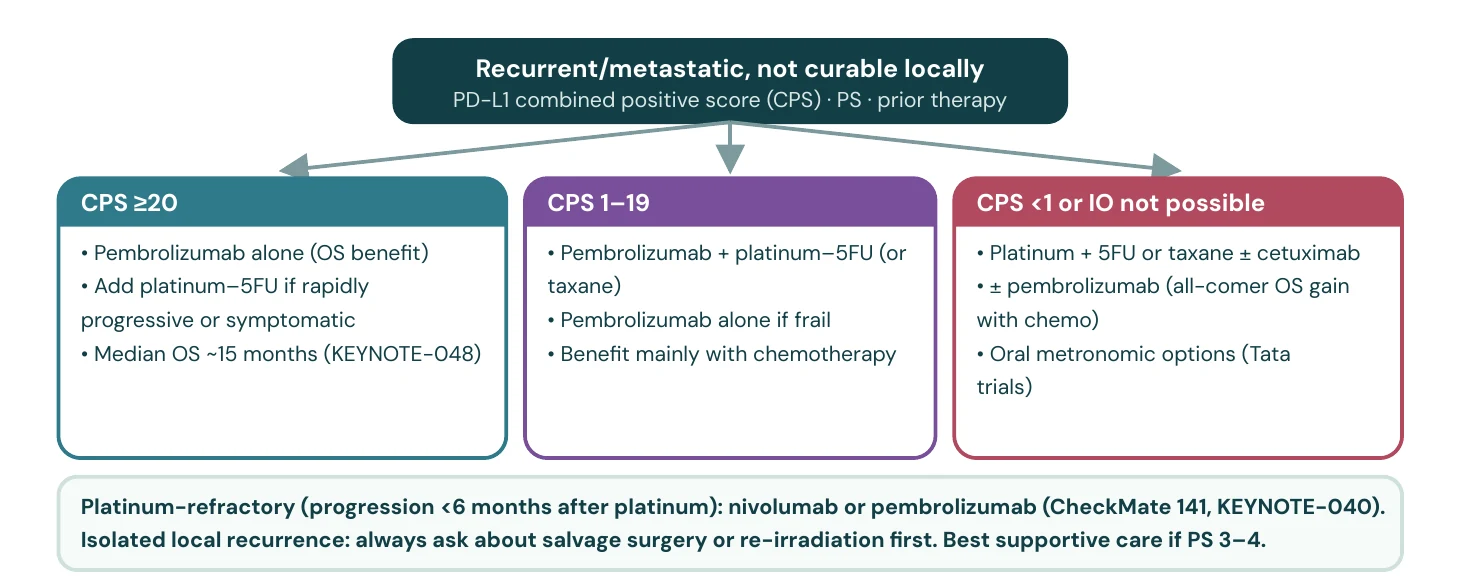
First-line choices by PD-L1 combined positive score (CPS)
Figure 15. First-line choices by PD-L1 combined positive score (CPS). Immunotherapy prolongs overall survival and gives a small group durable control; response rates alone underestimate its value.
  • First, ask whether the recurrence is curable: resectable local or isolated neck recurrence without distant spread → salvage surgery (elective bilateral neck dissection for recurrent larynx and pharynx cancers), with postoperative re-irradiation only for high-risk pathology; unresectable → re-irradiation with chemotherapy in selected patients at experienced centres. Distinguish a second primary from a recurrence (biopsy; especially a new lung lesion). Palliative systemic therapy is for the rest.
  • Pembrolizumab first line (KEYNOTE-048 [3], 4-year update [65]): pembrolizumab with platinum–5FU beat cetuximab–platinum–5FU in all patients (median OS 13 vs 11 months; 4-year OS 19 vs 5%). Pembrolizumab alone was better in CPS ≥1 (4-year OS 17 vs 6%), driven by CPS ≥20 (median 15 vs 11 months), with a lower response rate (17 vs 36%), early progression in some, and far less grade ≥3 toxicity (17 vs 69%).
  • EXTREME (platinum–5FU–cetuximab, then cetuximab maintenance) improved median OS from 7.4 to 10.1 months (EXTREME [66]) and remains the choice when immunotherapy is unsuitable. Nivolumab–ipilimumab did not beat it (CheckMate 651 [67]).
  • Platinum-refractory disease (progression within 6 months of platinum): nivolumab (median OS 7.7 vs 5.1 months; 1-year OS 34 vs 20%; CheckMate 141 [29]) or pembrolizumab (median 8.4 vs 6.9 months; KEYNOTE-[68] 040 [68]) over methotrexate, docetaxel or cetuximab.
  • Indian evidence for low-cost care: oral metronomic methotrexate–celecoxib (± erlotinib) is active and well tolerated (Patil 2019 [69]); adding low-dose nivolumab to metronomic chemotherapy improved overall survival in a randomised Tata Memorial trial (Patil 2023 [70]), a pragmatic option where full-dose immunotherapy is unaffordable.
  • Later lines: taxanes, cetuximab, methotrexate, platinum rechallenge after a long interval. Offer palliative care early; many patients need help with pain, bleeding, airway, feeding and wound care.
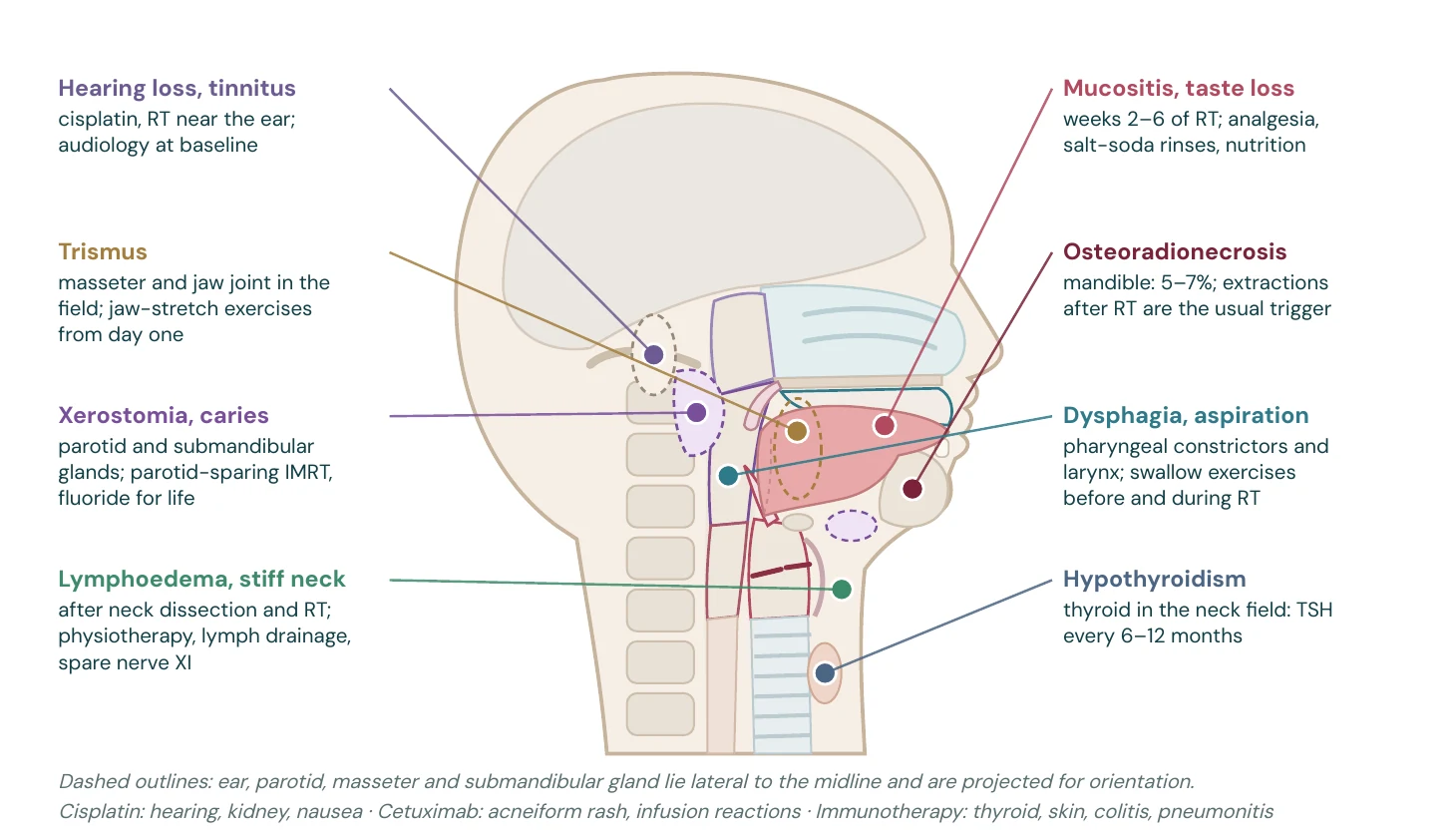
Side effects that shape survivorship, mapped to the organs at risk
Figure 16. Side effects that shape survivorship, mapped to the organs at risk. Most can be reduced before treatment starts: dental clearance, fluoride trays, swallowing and jaw exercises, and stopping tobacco.

Nasopharyngeal carcinoma: a distinct disease

Nasopharyngeal carcinoma (NPC) differs from other head and neck cancers in cause, histology, spread and treatment: it is driven by Epstein-Barr virus in most patients, is exquisitely sensitive to radiotherapy and chemotherapy, cannot be removed surgically at diagnosis, and spreads to distant sites more often. It is endemic in southern China and South-East Asia; in India it is uncommon except in the north-eastern states, so most Indian clinicians see it rarely and should refer to a centre that treats it regularly.

Cause, pathology and biology

  • Histology (WHO): non-keratinising carcinoma (differentiated or undifferentiated) is EBV-associated and dominates endemic regions; keratinising squamous carcinoma is less EBV-linked, more tobacco- and alcohol-related, less radiosensitive and relatively commoner outside endemic areas; basaloid squamous carcinoma is rare.
  • Risk factors: EBV, a diet rich in salt-preserved fish and meats (nitrosamines), family history (a first-degree relative raises risk several-fold), occupational wood dust and formaldehyde, and tobacco for the keratinising type.
  • EBV as a tumour marker: tumour cells carry EBV (EBER in-situ hybridisation on biopsy or a neck node identifies a nasopharyngeal origin). Plasma EBV DNA before treatment reflects tumour burden and predicts outcome; detectable levels after treatment predict relapse (Lin 2004 [71], Lee 2021 [72]). In endemic regions plasma EBV DNA screening found earlier-stage cancers (Chan 2017 [73]); it is not a screening test for low- incidence populations such as most of India. Assays are not yet standardised.

Presentation and workup

  • Typical presentation: a painless upper neck mass (the commonest first sign; often level II or V and bilateral), nasal obstruction or blood-stained nasal discharge, unilateral serous otitis media or hearing loss in an adult, and cranial nerve palsies from skull base spread (abducens: double vision; trigeminal: facial numbness or pain). Bimodal age: adolescents and young adults, and people in their 50s and 60s.
  • Trap: an adult with one-sided "glue ear" or a level V node treated repeatedly with antibiotics or antituberculous drugs. Look at the nasopharynx with a flexible scope before any neck node is excised.
  • Workup: nasopharyngoscopy and biopsy; MRI of the nasopharynx, skull base and neck (better than CT for skull base, parapharyngeal and intracranial spread, perineural disease and retropharyngeal nodes); PET- CT for stage III–IV or bulky nodes (distant metastases are commoner than in other head and neck cancers); baseline plasma EBV DNA where available; dental, audiology, ophthalmic and endocrine (pituitary, thyroid) baselines before RT.
CategoryAJCC 8th edition (simplified)
T1Nasopharynx, or extension to oropharynx or nasal cavity, without parapharyngeal involvement
T2Parapharyngeal space and/or adjacent soft tissue (medial or lateral pterygoid, prevertebral muscles)
T3Bony skull base, cervical vertebra, pterygoid structures and/or paranasal sinuses
T4Intracranial extension, cranial nerves, hypopharynx, orbit, parotid and/or soft tissue beyond the lateral pterygoid
N1Unilateral cervical and/or uni- or bilateral retropharyngeal nodes, ≤6 cm, above the caudal border of the cricoid
N2Bilateral cervical nodes, ≤6 cm, above the caudal border of the cricoid
N3Any node >6 cm and/or extending below the caudal border of the cricoid
Stage groupsI: T1N0 · II: T2N0 or T0–2N1 · III: T3 or N2 · IVA: T4 or N3 · IVB: M1

Treatment

SettingStandard approachNotesEvidence
Stage IIMRT alone to the nasopharynx and elective neckSurgery has no role for the primary; IMRT preserves salivary functionKam 2007[74]
Stage IIIMRT; add concurrent cisplatin for N1, bulky T2 or high EBV DNALow-risk T2N0 or T1N1 with low EBV DNA may need RT aloneChen 2011[75]
Stage III–IVAInduction gemcitabine–cisplatin (or TPF), then cisplatin-IMRTConcurrent cisplatin is the core; adding chemotherapy before or after improves control of distant diseaseZhang 2019 [76], Sun[77] 2016 [77], MAC-[78] NPC[78]
High risk after chemoradiationMetronomic capecitabine for 1 yearN2–N3 or T4 disease, or detectable EBV DNA after treatmentChen 2021[79]
Local recurrenceEndoscopic nasopharyngectomy if resectable; otherwise hyperfractionated re-IMRTExperienced centres only; late toxicity of re-RT is the main riskLiu 2021 [80], You[81] 2023[81]
Metastatic, first lineGemcitabine–cisplatin plus a PD-1 inhibitor (toripalimab, camrelizumab or tislelizumab)Oligometastatic disease: consider local RT to the primary and metastases after responseZhang 2016 [82], JUPITER-02 [83], CAPTAIN-1st[84]
  • Radiotherapy is the backbone: IMRT to about 70 Gy to gross disease with elective coverage of both necks and the retropharyngeal nodes. IMRT gave better salivary function than older techniques (Kam 2007 [74]) and allows high doses next to the brainstem, optic apparatus and temporal lobes.
  • Concurrent cisplatin for locoregionally advanced disease was established by Intergroup 0099[85] (chemoradiation plus adjuvant chemotherapy vs RT alone; large survival gain) and confirmed by the MAC-[78] NPC meta-analysis [78], in which adding chemotherapy to RT improved overall survival, most with concurrent plus induction or adjuvant chemotherapy.
  • Induction chemotherapy: gemcitabine–cisplatin before chemoradiation improved recurrence-free and overall survival (Zhang 2019 [76]); TPF improved failure-free survival (Sun 2016 [77]). This "induction then chemoradiation" sequence is now standard for stage III–IVA in fit patients, unlike other head and neck sites where induction rarely improves survival.
  • Adjuvant: one year of metronomic capecitabine after chemoradiation improved failure-free survival in high- risk patients (3-year about 85 vs 76%) with mild toxicity (Chen 2021 [79]); a practical, low-cost option.
  • Recurrent or metastatic disease: gemcitabine–cisplatin is the chemotherapy backbone (better PFS and OS than cisplatin–5FU; Zhang 2016 [82]). Adding a PD-1 inhibitor improved PFS and OS (toripalimab: median PFS 21.4 vs 8.2 months in the final analysis; JUPITER-02 [83], final OS [86]; camrelizumab: CAPTAIN-1st [84]). Unlike other head and neck cancers, a PD-L1 CPS threshold is not used. Long survival is possible in oligometastatic disease with chemotherapy and local RT.
  • Local recurrence: endoscopic nasopharyngectomy gave longer survival and fewer severe late effects than re-irradiation for resectable recurrences (Liu 2021 [80]); when re-RT is needed, hyperfractionated IMRT reduced severe late toxicity and improved survival compared with once-daily re-RT (You 2023 [81]).

Follow-up and late effects specific to NPC

  • MRI of the nasopharynx about 3 months after RT, then with clinical examination and nasoendoscopy; plasma EBV DNA where it was detectable at baseline.
  • Late effects need lifelong checks: hearing loss (cisplatin and RT to the middle ear), hypothyroidism and hypopituitarism (yearly endocrine tests), temporal lobe necrosis, cranial neuropathy, carotid stenosis, trismus, xerostomia and dental decay.
  • Family members of patients from endemic regions may ask about screening: advise prompt assessment of neck lumps, nasal bleeding or one-sided hearing loss; routine screening is not advised in low-incidence settings.

Quick-reference tables

Quick-reference tables (also printable as one PDF from the Printable Teaching Resources page). No chemotherapy doses; check current approvals and product information.

Table A. Pathology and biomarker tests that change management

TestWhere it mattersHow testedWhat it changesKey evidence
p16 (surrogate for HPV)Every oropharyngeal squamous cancer; neck node of unknown primaryIHC: strong, diffuse nuclear and cytoplasmic staining in ≥70% of cells; confirm with HPV DNA/RNA (ISH or PCR) when decisions hinge on it; FNA cell blocks under-call p16Selects the HPV staging table; better prognosis; points the unknown- primary search to tonsil and base of tongueAng 2010 [20], EPIC-OPC 2023[9]
p16/HPV discordanceOropharynx cancers tested both waysp16 IHC plus HPV DNA/RNAp16+/HPV− or p16−/HPV+ behaves close to HPV- negative disease (5-year OS about 55% vs 81% when both positive): do not de- escalateEPIC-OPC 2023[9]
Depth of invasion (DOI)Oral cavity, above all oral tongueMeasured from the basement membrane of adjacent normal mucosa (not tumour thickness)Sets T category (>5 mm = at least T2, >10 mm = T3); DOI >3 mm → elective neck treatment; >4 mm favours adjuvant RTAJCC 8th; D'Cruz[38] 2015[38]
MarginsEvery resectionClear >5 mm; close 1–5 mm (oral cavity <2 mm in some guidance); involved = tumour at inkInvolved: re-excise or postoperative chemoradiation; close: re- excise (early oral) or RTBernier 2005[62]
Extranodal extension (ENE)Every neck dissectionPathology: tumour through the node capsule (record major vs minor if possible)Adds cisplatin to postoperative RT (± nivolumab in HPV-negative disease); upstages to pN3b in non-HPV sitesEORTC 22931 [28], RTOG 9501 [61], NIVOPOSTOP[2]
PNI, LVI, grade, nodal numberResected specimensPathology synoptic reportIntermediate risk → postoperative RT alone; ≥2 nodes is a weaker reason for chemotherapyBernier 2005[62]
PD-L1 combined positive score (CPS)Resectable stage III–IVA (perioperative pembrolizumab) and recurrent/metastatic disease22C3 assay; CPS = PD-L1- positive tumour cells and immune cells ÷ tumour cells × 100CPS ≥1: pembrolizumab- based first line; CPS ≥20: pembrolizumab alone is an option; CPS ≥1 needed for KEYNOTE-689 benefitKEYNOTE-048 [3], KEYNOTE-689[1]
EBV DNA / EBERNasopharynx; neck node of unknown primary with undifferentiated histologyEBER ISH on tissue; plasma EBV DNAPoints to nasopharynx; plasma EBV DNA for prognosis and follow-up (see Nasopharyngeal carcinoma, section 06)—
Cisplatin fitnessBefore chemoradiationCreatinine clearance, audiogram, neuropathy, performance status, age, weight lossIneligible: RT alone (older/unfit) or RT + weekly docetaxel / carboplatin; avoid cetuximab in HPV- positive diseasePatil 2023 [26], RTOG 1016[23]

Table B. Treatment by setting (no doses)

SettingStandardAlternatives / notesEvidence
Oral cavity T1–T2 N0Wide excision (margin >5 mm) + elective neck dissection if DOI >3 mm (SLNB in expert centres)DOI ≤1 mm lateralised: observe neck; close margin: re-excise; RT only if surgery not possibleD'Cruz 2015 [38], Senti-[39] MERORL[39]
Oral cavity T3–T4a or N+Resection + neck dissection + reconstruction → adjuvant RT ± cisplatinCPS ≥1: perioperative pembrolizumab option; borderline resectable: TPF induction then reassessKEYNOTE-689 [1], EORTC 22931[28]
Oropharynx T1–T2 N0–N1Definitive RT or transoral surgery + neck dissectionChoose the route that is least likely to need a second or third modalityORATOR[21]
Oropharynx stage III–IV (HPV+ or −)Cisplatin chemoradiation (weekly or 3-weekly)Cisplatin-ineligible: carboplatin- based or weekly docetaxel; never cetuximab in HPV+; TORS for selected small primariesRTOG 1016 [23], De-[24] ESCALaTE HPV [24], Noronha 2018[49]
Glottic T1–T2RT (small field, slightly hypofractionated) or transoral laser surgeryNo elective neck treatment; voice outcomes similarNCCN; EHNS–ESMO–ESTRO guideline
Supraglottic T1–T2RT or transoral surgery with bilateral elective neck (II–IV)Open supraglottic laryngectomy for selected casesNCCN
Larynx/hypopharynx stage III–IVA, larynx preservation wantedCisplatin chemoradiation, or TPF induction → RT in respondersT4a with cartilage destruction or a non-functional larynx: total laryngectomy + adjuvant RTRTOG 91-11 [41], VA[40] Larynx [40], TAX[53] 324[53]
Postoperative: positive margin or ENERT + cisplatin (weekly preferred)HPV-negative: add nivolumab (NIVOPOSTOP); cisplatin-ineligible: RT ± weekly docetaxelJCOG1008 [64], NIVOPOSTOP [2], Patil[26] 2023[26]
Postoperative: intermediate riskRT alone, within 6 weeks of surgeryCetuximab with RT improved DFS but not OS and doubled severe toxicityAng 2001[48]
Unfit, ≥70 years or comorbidRT alone (accelerated or hyperfractionated if feasible)Hypofractionated palliative RT for symptomsMACH-NC 2021 [22], MARCH meta-[46] analysis[46]
Recurrent/metastatic, first line, CPS ≥1Pembrolizumab alone (CPS ≥20) or with platinum–5FURapid progression: add chemotherapy regardless of CPSKEYNOTE-048 [3], KEYNOTE-048[65] update[65]
Recurrent/metastatic, CPS <1 or IO not possiblePlatinum + 5FU or taxane ± cetuximab (EXTREME) ± pembrolizumabFrail: single-agent taxane, methotrexate or oral metronomic regimensEXTREME [66], Patil[69] 2019[69]
Platinum-refractory (<6 months)Nivolumab or pembrolizumabLow-dose nivolumab with metronomic chemotherapy improved survival in an Indian trialCheckMate 141 [29], KEYNOTE-040 [68], Patil 2023[70]
Nasopharyngeal carcinoma (stage III–IVA)Induction gemcitabine– cisplatin (or TPF) → cisplatin- IMRT; metronomic capecitabine if high riskStage I: IMRT alone; metastatic: gemcitabine–cisplatin + PD-1 inhibitor; local recurrence: endoscopic surgery or hyperfractionated re-IMRTZhang 2019 [76], Chen[79] 2021 [79], JUPITER-[83] 02[83]
Isolated local recurrenceSalvage surgery if resectableRe-irradiation (IMRT or SBRT) in selected patients at experienced centresNCCN

Table C. Before, during and after treatment: supportive care checklist

WhenWhatWhy
BeforeDental assessment and OPG; extract unsalvageable teeth ≥10–14 days before RT; fluoride traysExtractions in irradiated bone are the main trigger for osteoradionecrosis
BeforeDietitian: baseline weight, BMI, swallowing; plan feeding route (prophylactic tube in selected high-risk patients)Weight loss >10% predicts toxicity and treatment breaks
BeforeSpeech and swallowing assessment; start swallow and jaw exercisesPreventive exercises improve swallowing outcomes whatever the timing (PRO-ACTIVE)
BeforeStop tobacco and areca nut; alcohol counselling; quitline 1800- 11-2356Continued smoking lowers response and survival and raises toxicity
BeforeAudiogram, creatinine clearance, hepatitis B screen, TSH baselineCisplatin eligibility; baseline for late hypothyroidism
DuringWeekly review: mucositis, pain (step up to opioids early), weight, hydration, skinAvoid unplanned RT breaks: every lost day lowers local control
DuringSalt-and-soda rinses several times a day; soft, non-spicy food; treat oral candidaMucositis is unavoidable; good care limits it
DuringFever on cisplatin/TPF: same-day neutropenia check; G-CSF ± antibiotic prophylaxis with TPFFebrile neutropenia in about 1 in 8 on TPF
AfterClinic + scope per schedule; PET-CT at 12 weeks after CRT for node-positive diseaseEarlier PET gives false positives
AfterTSH every 6–12 months; dental review 6-monthly; fluoride for lifeHypothyroidism and radiation caries are common and silent
AfterSwallow, jaw (trismus) and shoulder physiotherapy; lymphoedema careLate dysphagia and trismus can appear years later
AfterScreen for depression and suicide risk; return-to-work and family supportHead and neck survivors carry a high psychological burden

Table D. Managing common side effects

ProblemUsual causePreventAct when
Oral mucositisRT ± chemotherapyOral hygiene, salt-soda rinses, IMRT, stop tobaccoCannot swallow liquids or pain uncontrolled: admit, IV fluids, opioids, feeding tube
XerostomiaRT to parotid/submandibular glandsParotid-sparing IMRT (PARSPORT)Saliva substitutes, sips of water, sugar- free gum; pilocarpine in selected patients
Radiation caries, osteoradionecrosisXerostomia; extractions after RTFluoride trays for life; extractions before RT; atraumatic dentistry laterExposed bone >3 months: oral surgery referral; pentoxifylline-tocopherol or surgery for advanced cases
Dysphagia, aspirationRT to pharyngeal constrictors, surgerySwallow exercises; keep eating by mouth when safe; DO-IMRT (DARS)Cough with meals, chest infections: video-fluoroscopy or FEES; dilatation for stricture
TrismusRT to masticator muscles, surgeryJaw-stretch exercises from day oneMouth opening <35 mm: structured therapy (stacked spatulas, devices)
Hearing loss, tinnitusCisplatin, RT near the earBaseline audiogram; switch agent if hearing fallsHearing aids; consider weekly schedule or alternative sensitiser
Kidney injury, hypomagnesaemiaCisplatinHydration, magnesium, avoid nephrotoxinsCreatinine rise: hold and reassess eligibility
Acneiform rash, infusion reactionCetuximabSkin care, sun protection, premedicationGrade 3 rash: hold and treat; anaphylaxis: stop permanently
Immune-related effectsPembrolizumab, nivolumabBaseline TSH, LFT, glucose; patient alert cardDiarrhoea, breathlessness, rash, fatigue: grade and treat early (steroids as per guidelines)
HypothyroidismNeck RT, immunotherapyTSH every 6–12 monthsRaised TSH: thyroxine replacement
Neck fibrosis, lymphoedema, shoulder dropNeck dissection (nerve XI), RTNerve-sparing dissection; early physiotherapyManual lymph drainage, shoulder rehabilitation
Weight lossAll of the aboveWeekly weights; early dietitian; tube before >10% lossRapid loss or dehydration: feeding tube, admission
07 Management algorithms

These decision paths pull together sections 02–06. Colours: teal for early disease, purple for intermediate paths, rose for advanced or high-risk paths. Algorithms 3 and 4 give site-specific detail for laryngeal and hypopharyngeal cancer.

Algorithm 1Oral cavity cancer
Biopsy-proven oral SCC: CT or MRI of the primary and neck · CT chest (PET-CT if stage III–IV) · DOI estimate · dental OPG · nutrition · tobacco cessation · PD-L1 CPS if stage III–IVA · tumour board
T1–T2, clinically N0
Wide excision (final margin >5 mm) + neck by DOI and site
DOI >3 mm or buccal/gingiva → elective neck dissection (levels I–III/IV)
DOI 1–3 mm, lateral tongue → SLNB (expert centre) or dissection
Close/positive margin → re-excise; pN+, bone, PNI/LVI → adjuvant RT
DOI ≤1 mm and lateralised: observe the neck
T3–T4a or N+, resectable
CPS ≥1 → option: 2 doses of pembrolizumab, then surgery
CPS <1 / unavailable → surgery first
Resection + neck dissection + free-flap reconstruction
Margin+ or ENE → RT + cisplatin (HPV-negative: ± nivolumab)
Other risk features → RT alone
Start RT within 6 weeks; continue pembrolizumab if started
Borderline, unresectable or unfit
Borderline resectable, fit → TPF induction → reassess for surgery
Technically unresectable (masticator space, skull base, carotid) → cisplatin chemoradiation
Unfit for surgery or chemo → RT alone (± weekly docetaxel if cisplatin-ineligible)
PS 3–4 or uncontrolled comorbidity: palliative RT and supportive care

All patients: dental clearance before RT · swallow and jaw exercises · weight weekly · PET-CT at 12 weeks only after definitive (chemo)RT · TSH every 6–12 months after neck RT · stop tobacco and areca nut for life.

Algorithm 2Oropharynx, larynx and hypopharynx
Biopsy-proven SCC: p16 (oropharynx) · CT/MRI neck + CT chest or PET-CT · laryngoscopy (cord mobility) · audiogram, creatinine clearance · dental · nutrition · swallow baseline · tumour board
Early (stage I–II)
Oropharynx T1–T2 → RT or TORS + neck dissection (pick the route least likely to need a 2nd modality)
Glottic T1–T2 → RT or transoral laser; no elective neck
Supraglottic T1–T2 → RT or transoral surgery + bilateral neck (II–IV)
HPV-positive T1–T2 N1 is stage I: same options
Locally advanced, larynx can be preserved
Cisplatin chemoradiation (weekly or 3-weekly), IMRT, once daily
Or TPF induction → RT/CRT in responders; non-responders → surgery
Clinical review 4–6 weeks; PET-CT at 12 weeks → salvage surgery for residual
Cisplatin-ineligible: weekly docetaxel or carboplatin; never cetuximab in HPV+
T4a larynx/hypopharynx or unfit
Cartilage destruction or dead larynx → total laryngectomy + neck dissection → adjuvant RT ± cisplatin (± nivolumab if HPV-negative)
CPS ≥1, resectable → option of perioperative pembrolizumab
Over 70 or frail → RT alone (altered fractionation if feasible)
Hypopharynx: high distant risk; nutrition first

All patients: stop smoking (quitline 1800-11-2356) · avoid treatment gaps · swallow exercises before RT · voice rehabilitation after laryngectomy · TSH 6–12-monthly · yearly low-dose chest CT if ≥20 pack-years.

Algorithm 3Laryngeal cancer (glottic, supraglottic, subglottic)
Biopsy-proven laryngeal SCC: laryngoscopy (stroboscopy for early glottic) · cord mobility · CT neck for cartilage and pre-epiglottic/paraglottic spread · CT chest (PET-CT if stage III–IV) · lung function, voice and swallow baseline · dental · tumour board with a surgeon who offers partial and total laryngectomy
Early (T1–T2 N0)
Glottic T1a–T1b, selected T2 → transoral laser cordectomy or RT (small field, moderately hypofractionated); no elective neck
Supraglottic T1–T2 → RT to primary + bilateral neck (II–IV), or transoral/open supraglottic laryngectomy + bilateral neck dissection
Subglottic (rare) → RT including level VI, or surgery; often presents late
Anterior commissure or impaired mobility (T2b): RT usually preferred; voice outcomes of laser and RT are similar for small tumours
T3 (or N+), larynx can be preserved
Cisplatin chemoradiation (RTOG 91-11: best locoregional control and larynx preservation)
Or TPF induction → response → RT/CRT; no response → total laryngectomy
Selected fit patients → supracricoid partial laryngectomy in expert centres
Clinical review 4–6 weeks; PET-CT at 12 weeks → salvage laryngectomy for residual
Cisplatin-ineligible: RT + weekly docetaxel; over 70 or frail: RT alone (altered fractionation)
T4a, non-functioning larynx or salvage
Total laryngectomy + neck dissection (bilateral for supraglottic; level VI for subglottic/transglottic) + voice prosthesis
Adjuvant RT; add cisplatin for ENE or positive margin (± nivolumab if HPV-negative); CPS ≥1: perioperative pembrolizumab option
Refuses laryngectomy or unfit → chemoradiation, accepting lower larynx preservation and survival
Poor lung function or chronic aspiration also favours total laryngectomy over partial surgery

All patients: stop smoking (quitline 1800-11-2356) · speech and swallow therapy before and after treatment · stoma care and humidification after laryngectomy · TSH 6–12-monthly after neck RT · yearly low-dose chest CT if ≥20 pack-years.

Algorithm 4Hypopharyngeal cancer (pyriform sinus, post-cricoid, posterior wall)
Biopsy-proven hypopharyngeal SCC: panendoscopy with oesophagoscopy (synchronous oesophageal cancer) · CT/MRI neck · PET-CT (high distant risk) · nutrition first (feeding tube if weight loss or aspiration) · lung function · dental · tumour board
Early (T1–T2, N0–N1), uncommon
RT or chemoradiation to primary and both necks (most patients)
Selected small pyriform or posterior wall tumours → transoral or open partial pharyngectomy + bilateral neck dissection
Most patients present with nodes: early disease is the exception
T2–T3 or N+, larynx can be preserved
Cisplatin chemoradiation, or TPF induction → responders RT/CRT
EORTC 24891: induction then RT gave the same survival as surgery and a functioning larynx in many survivors
Non-responders or residual disease (PET-CT at 12 weeks) → total laryngopharyngectomy
Cisplatin-ineligible: RT + weekly docetaxel or carboplatin
T4a, cartilage destruction or extensive post-cricoid
Total laryngopharyngectomy (± oesophagectomy) + bilateral neck and level VI dissection
Reconstruction: free jejunum or tubed ALT/radial forearm flap; gastric pull-up when the oesophagus is removed
Adjuvant RT ± cisplatin (ENE or margin+; ± nivolumab if HPV-negative)
T4b or unresectable: chemoradiation if fit, otherwise palliative RT and supportive care

All patients: nutrition and weight weekly · speech rehabilitation (voice prosthesis) · stricture dilatation if swallowing narrows · surveillance of the oesophagus and lungs for second primaries · TSH 6–12-monthly.

Algorithm 5Recurrent or metastatic disease
Recurrence suspected: biopsy · PET-CT · is it curable? (isolated local/neck → salvage surgery or re-irradiation at an experienced centre) · PD-L1 CPS · performance status · goals of care
CPS ≥20
Pembrolizumab alone
Rapid progression or heavy symptoms → add platinum–5FU (or taxane)
Responses are slower; some progress before they respond
CPS 1–19
Pembrolizumab + platinum–5FU (PS 0–1)
Frail → pembrolizumab alone
Progression → taxane, cetuximab or methotrexate
CPS <1, IO unaffordable or unsuitable
Platinum + 5FU or taxane ± cetuximab (EXTREME) ± pembrolizumab
Platinum-refractory (<6 months) → nivolumab or pembrolizumab
Cost-limited → oral metronomic chemotherapy ± low-dose nivolumab (Tata trials)
PS 3–4: best supportive care

All patients: early palliative care · pain, bleeding and airway plans · nutrition and feeding route decisions with the family · trials where available · carboplatin rather than cisplatin after previous cisplatin.

Algorithm 6Nasopharyngeal carcinoma
Biopsy-proven NPC (EBER positive): nasoendoscopy · MRI nasopharynx, skull base and neck · PET-CT if stage III–IV or bulky nodes · plasma EBV DNA · dental, audiology, endocrine and eye baselines · tumour board in an experienced centre
Stage I–II
Stage I → IMRT alone (no surgery to the primary)
Stage II → IMRT + concurrent cisplatin (N1, bulky T2, high EBV DNA)
Low-risk T2N0 / T1N1 with low EBV DNA: RT alone may suffice
Stage III–IVA
Induction gemcitabine–cisplatin (or TPF) × 3
Cisplatin + IMRT to ~70 Gy, both necks
High risk (N2–3, T4, EBV DNA detectable after RT) → metronomic capecitabine 1 year
MRI ~3 months after RT; EBV DNA monitoring
Recurrent or metastatic
Metastatic → gemcitabine–cisplatin + PD-1 inhibitor (no CPS threshold)
Oligometastatic → add local RT to primary and metastases after response
Local recurrence, resectable → endoscopic nasopharyngectomy
Unresectable → hyperfractionated re-IMRT

All patients: refer to a centre that treats NPC regularly · yearly TSH and pituitary tests, hearing checks · watch for temporal lobe necrosis, cranial neuropathy and carotid stenosis · dental care for life.

08 Survivorship, follow-up & reducing recurrence
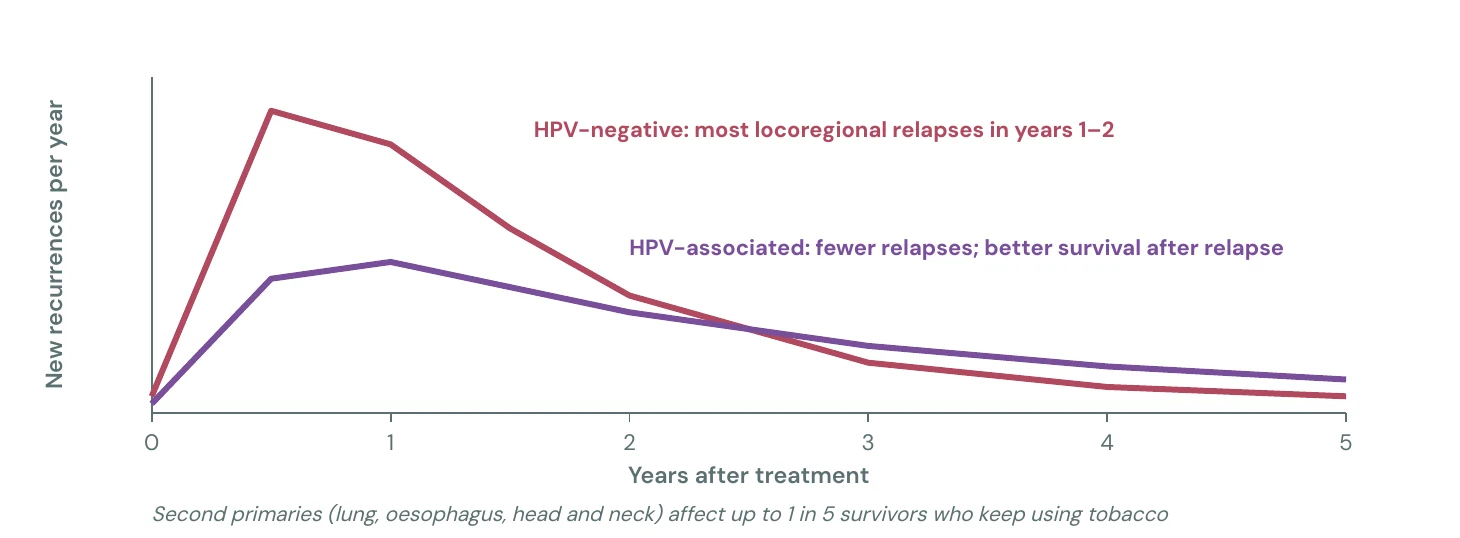
When relapses happen (illustrative shapes, not to scale)
Figure 17. When relapses happen (illustrative shapes, not to scale). About 80–90% of recurrences appear within 2–3 years, so follow-up is most intensive then; second primary cancers continue for life.
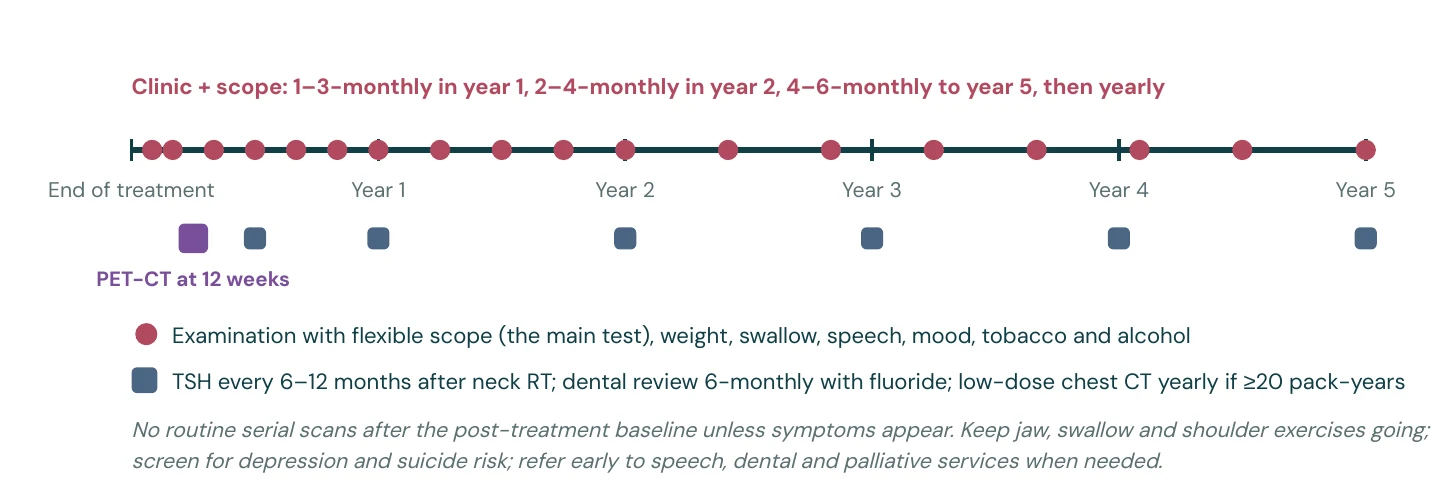
A simple follow-up rhythm (NCCN, American Cancer Society survivorship guideline)
Figure 18. A simple follow-up rhythm (NCCN, American Cancer Society survivorship guideline). Imaging is a baseline at about 12 weeks; afterwards the examination and the patient’s symptoms drive tests.

Follow-up protocol (NCCN, American Cancer Society)

IntervalWhatAlso
Year 1Clinic with examination and flexible scope every 1–3 monthsBaseline imaging of primary and neck about 12 weeks after treatment (PET-CT after chemoradiation)
Year 2Every 2–4 monthsImaging only for symptoms or a hard-to-examine site
Years 3–5Every 4–6 monthsTSH every 6–12 months after neck RT; dental review 6-monthly
After 5 yearsYearly, for lifeLate effects, second primaries; low-dose chest CT yearly if ≥20 pack-years and fit
  • Second primaries and lifestyle: up to 20% of survivors develop a second tobacco- or alcohol-related cancer. Stopping tobacco and areca nut is the most effective step after treatment; offer cessation support at every visit (quitline 1800-11-2356).
  • Teeth and jaw: lifelong fluoride, 6-monthly dental review, atraumatic dentistry; osteoradionecrosis affects about 5–7% after IMRT and most cases follow extractions in irradiated bone. Trismus affects up to a third: jaw exercises.
  • Swallowing: keep eating by mouth when safe; start or continue swallow exercises; late radiation-associated dysphagia can appear years later (Hutcheson 2012 [87]). 10–25% of survivors depend on tube feeding in some series.
  • Thyroid: TSH every 6–12 months after neck RT; hypothyroidism is common and silent.
  • Neck and shoulder: lymphoedema (face and neck), fibrosis and shoulder dysfunction after neck dissection: physiotherapy and manual lymph drainage.
  • Mind and family: survivors face high rates of depression, anxiety and suicide; disfigurement, speech and eating changes affect work and marriage. Screen at every visit; involve counsellors and support groups (ACS[88] guideline [88]).
  • Shared care with the family doctor and dentist: give them the follow-up plan, red flags (new ulcer, lump, pain, bleeding, hoarseness, swallowing change, breathlessness) and the TSH schedule.
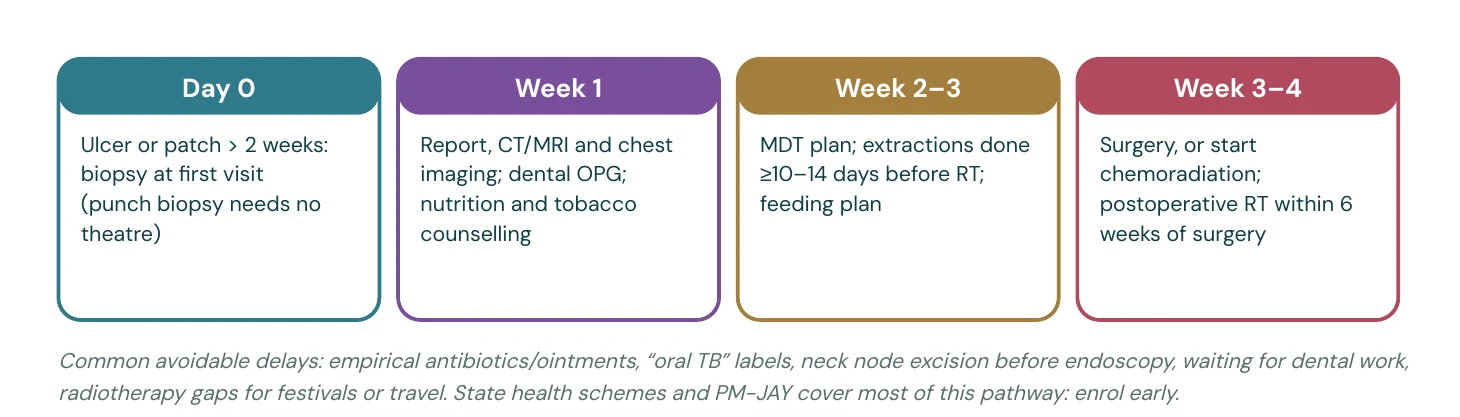
A four-week target from first visit to treatment
Figure 19. A four-week target from first visit to treatment. Longer intervals from diagnosis to treatment are linked with worse survival in large observational studies; in India most of the delay happens before the biopsy.
09 Landmark trials
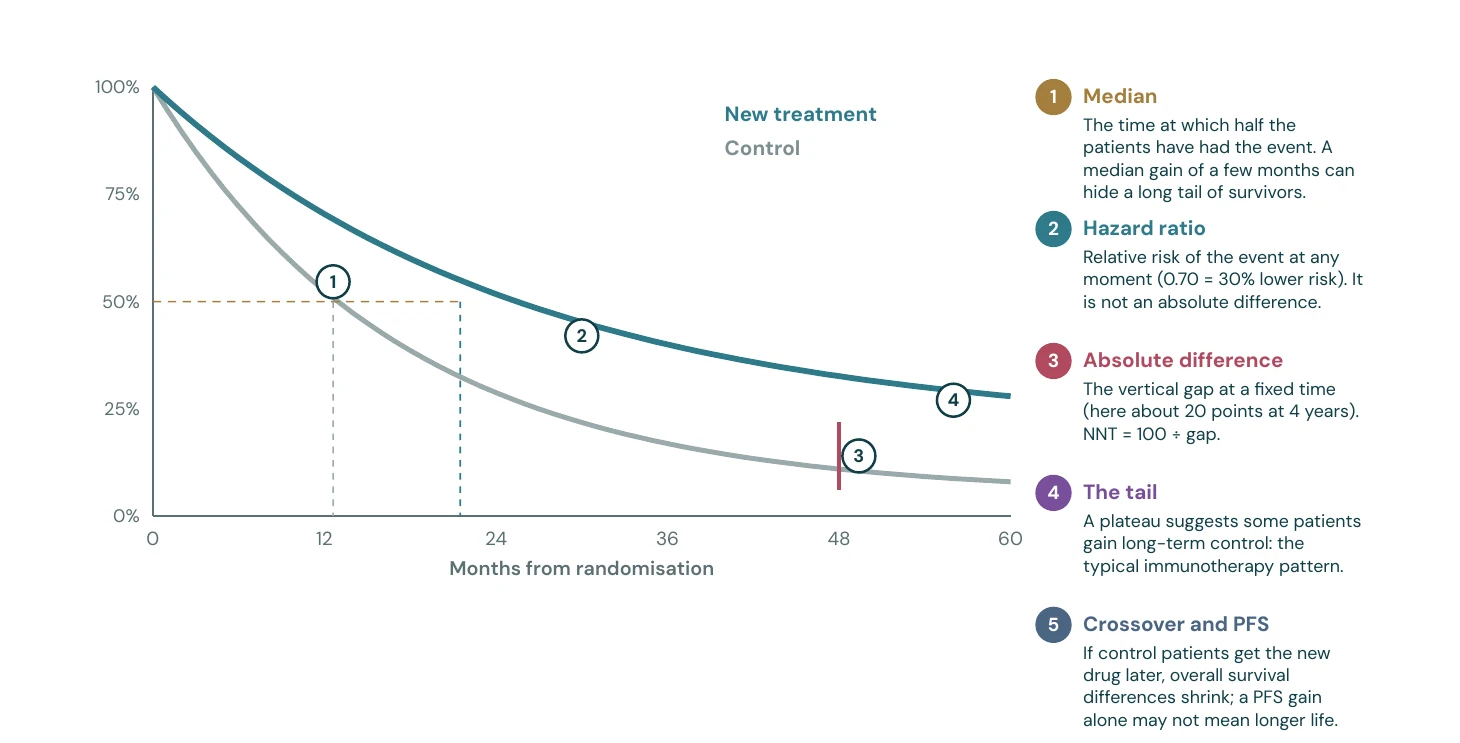
How to read a survival curve (illustrative)
Figure 20. How to read a survival curve (illustrative). Use the absolute gap at a fixed time and overall survival, not the median or PFS alone, when weighing benefit against toxicity and cost.
  • MACH-NC (2021) [22]: 107 trials, 19,805 patients → concurrent chemoradiation +6.5% absolute 5-year survival; no gain over 70; induction or adjuvant chemotherapy alone does not improve survival → concurrent cisplatin-RT is the backbone.
  • EORTC 22931 [28]/ RTOG 9501 [61]: postoperative RT ± cisplatin → benefit confined to positive margins and ENE → defines high-risk adjuvant therapy.
  • D'Cruz (2015) [38]: elective vs therapeutic neck dissection in early oral cancer (Tata Memorial, 500 patients) → 3-year OS 80 vs 67.5% → elective neck dissection when DOI >3 mm.
  • Senti-MERORL [39]: sentinel node biopsy vs elective dissection (cT1–T2N0 oral/oropharynx) → equal 5-year survival, less shoulder morbidity → SLNB in expert centres.
  • KEYNOTE-689 [1]: perioperative pembrolizumab in resectable stage III–IVA disease → 3-year EFS about 60 vs 46% in CPS ≥1; OS immature → new option for PD-L1-positive resectable disease.
  • NIVOPOSTOP [2]: nivolumab + postoperative cisplatin-RT in high-risk resected disease → 3-year DFS 63 vs 53% → option for HPV-negative high-risk disease.
  • VA Larynx [40]and RTOG 91-11 [41]: induction chemotherapy or chemoradiation instead of laryngectomy → larynx preserved without survival loss → organ preservation became standard.
  • PET-NECK [31]: PET-CT surveillance vs planned neck dissection after chemoradiation for N2–N3 → same survival, far fewer operations → PET-CT at 12 weeks decides.
  • TAX 324 [53]: TPF vs PF induction → 5-year OS 52 vs 42% → if induction is used, use TPF; PARADIGM [55]and DeCIDE [56]found no survival gain from adding it to chemoradiation.
  • RTOG 1016 [23]and De-ESCALaTE HPV [24]: cetuximab vs cisplatin with RT in HPV-positive oropharynx cancer → worse survival with cetuximab → do not de-escalate outside trials.
  • Tata docetaxel trial (2023) [26]: RT ± weekly docetaxel in cisplatin-ineligible patients → 2-year OS 51 vs 42% → an affordable sensitiser.
  • KEYNOTE-048 [3]: pembrolizumab ± chemotherapy vs EXTREME first line → longer survival (4-year OS 19 vs 5% with chemotherapy) → immunotherapy first line by CPS.
  • CheckMate 141 [29]: nivolumab after platinum → 1-year OS 34 vs 20% → PD-1 inhibitors for platinum- refractory disease.
  • Tata low-dose nivolumab trial (2023) [70]: low-dose nivolumab + metronomic chemotherapy vs metronomic chemotherapy → better overall survival → an access-driven option for Indian practice.
  • PARSPORT [43]and DARS [45]: parotid-sparing and dysphagia-optimised IMRT → less dry mouth and better swallowing → function is an endpoint too.
10 Practice pearls & pitfalls
  • A non-healing ulcer or patch for more than 2 weeks after removing an irritant needs a biopsy, not another ointment.
  • A painless, hard or cystic neck node in an adult is metastatic cancer until proven otherwise: FNAC, then look for the primary; do not excise it first.
  • Hoarseness for more than 3 weeks in a smoker means laryngoscopy.
  • Measure DOI and treat the neck: elective neck dissection saves lives in early oral cancer when DOI exceeds 3 mm (D'Cruz).
  • Re-excise close margins in early oral cancer; radiotherapy is a poor substitute for a clear margin.
  • In edentulous patients the mandible is invaded more easily; plan segmental resection and fibula reconstruction early.
  • Test p16 in every oropharynx cancer, but do not use it to de-escalate treatment outside a trial.
  • Never replace cisplatin with cetuximab in HPV-positive oropharynx cancer; use carboplatin or docetaxel if cisplatin is impossible.
  • Glottic T1–T2 cancers do not need elective neck treatment; supraglottic cancers need both sides of the neck.
  • Weekly cisplatin works only at full dose; count the cumulative dose (aim ≥200 mg/m²).
  • Over 70 or frail: radiotherapy alone; chemotherapy added no survival in MACH-NC.
  • Extract hopeless teeth before radiotherapy, not after; prescribe fluoride for life.
  • Every day of unplanned RT break costs control: solve pain, nutrition and transport problems before they cause a gap.
  • PET-CT after chemoradiation at 12 weeks, not earlier.
  • Check PD-L1 CPS early: it decides perioperative pembrolizumab and first-line therapy at recurrence.
  • Where full-dose immunotherapy is unaffordable, low-dose nivolumab with metronomic chemotherapy is evidence-based (Tata Memorial).
  • Ask about tobacco, areca nut and alcohol at every visit for life; cessation is treatment.
11 Case vignettes: lines of management

Eight cases, written for postgraduates and practising clinicians. Read the presentation, decide on diagnosis, workup and plan, then open the line of management. No doses are given.

Case 1Oral tongue · early · DOI

A tongue ulcer treated with gels for three months

46 years, manLateral tongue, 1.8 cmcN0, DOI ~4 mm on MRI

A 46-year-old shopkeeper who chews gutka has a painful ulcer on the left lateral tongue next to a sharp molar. Two dentists prescribed gels and smoothed the tooth; it persisted for 3 months. Examination: 1.8 cm indurated ulcer, no palpable nodes. Punch biopsy: moderately differentiated SCC.

Before you open the answer: what is the likely diagnosis, what must be done before treatment, and what is the plan?

Show the line of management
  1. Staging
    MRI of the oral cavity and neck: DOI about 4 mm, no suspicious nodes; CT chest clear. Dental review; tobacco cessation.
  2. Surgery
    Partial glossectomy with a 1 cm planned margin and an ipsilateral selective neck dissection (levels I–IV), because DOI is above 3 mm.
  3. Pathology
    pT2 (DOI 6 mm), margins clear at 7 mm, 0 of 28 nodes, no PNI or LVI: stage II.
  4. After surgery
    No adjuvant therapy. Follow-up 1–3-monthly in year 1; stop gutka permanently (the field is at risk).

Teaching points

  • Two weeks is the limit for an unexplained mouth ulcer: biopsy.
  • DOI, not size alone, drives T stage and elective neck treatment.
  • Elective neck dissection improved survival in early oral cancer (D'Cruz).

See: Sections 02, 03, 05 · Algorithm 1 · D'Cruz 2015 [38], Senti-MERORL[39]

Case 2Buccal mucosa · pN1 · adjuvant RT

A cheek ulcer in a long-time khaini user

52 years, womanBuccal mucosa, 3.5 cmOral submucous fibrosis

A 52-year-old agricultural worker who has used khaini and pan for 30 years has a 3.5 cm ulceroproliferative lesion of the right buccal mucosa. Mouth opening is two fingers (submucous fibrosis). A 1.5 cm mobile level IB node is palpable. Biopsy: SCC.

Before you open the answer: what is the likely diagnosis, what must be done before treatment, and what is the plan?

Show the line of management
  1. Staging
    Contrast CT face and neck: no bone invasion, no masticator space involvement; one 1.6 cm level IB node without ENE. CT chest clear. Dental clearance; dietitian.
  2. Surgery
    Wide excision with a margin of the buccal pad and skin preserved, modified neck dissection, radial forearm free flap to reline the cheek.
  3. Pathology
    pT3 (DOI 11 mm), margins clear (6 mm), 1 of 32 nodes positive (2 cm, ENE negative), PNI present.
  4. Adjuvant
    Postoperative RT (about 60 Gy) to the primary and neck, starting within 6 weeks; no chemotherapy (no positive margin or ENE). Jaw-stretch exercises during and after RT to prevent trismus.

Teaching points

  • Buccal cancers spread deep early; reconstruct the lining or trismus follows.
  • Adjuvant RT alone for intermediate-risk features; cisplatin only for margins or ENE.
  • Submucous fibrosis makes examination and follow-up harder: train the patient in self-examination.

See: Sections 02, 05, 06 · Algorithm 1 · Bernier 2005 [62], Ang 2001[48]

Case 3Gingivobuccal T4a · CPS ≥1 · ENE

A loose tooth that was extracted

58 years, manLower gum, bone invasioncN2b, CPS 15

A 58-year-old man had a loose lower molar extracted; the socket never healed and a growth appeared. Examination: 4 cm lesion of the lower gingivobuccal sulcus with chin numbness and two palpable ipsilateral nodes. Biopsy: SCC; PD-L1 CPS 15.

Before you open the answer: what is the likely diagnosis, what must be done before treatment, and what is the plan?

Show the line of management
  1. Staging
    CT: erosion into the medullary mandible (T4a), two nodes (N2b). PET-CT: no distant spread. Stage IVA. Fit, PS 1.
  2. Options at the tumour board
    Surgery first, or two doses of neoadjuvant pembrolizumab followed by surgery and pembrolizumab with and after adjuvant RT (KEYNOTE-689, CPS ≥1). Cost and access discussed; he chooses the pembrolizumab route through an assistance programme.
  3. Surgery
    Composite resection with segmental mandibulectomy, comprehensive ipsilateral neck dissection, fibula free flap with plate.
  4. Pathology
    pT4a, margins clear, 3 nodes positive, one with extranodal extension.
  5. Adjuvant
    RT with cisplatin (ENE) plus pembrolizumab, then maintenance pembrolizumab. (Had he not received neoadjuvant pembrolizumab, nivolumab with cisplatin-RT would be the NIVOPOSTOP option for this HPV-negative, ENE-positive disease.)

Teaching points

  • A non-healing extraction socket is a classic presentation of gingival cancer.
  • Bone invasion → segmental resection and free-flap reconstruction.
  • ENE → chemoradiation; checkpoint inhibitors now extend the options before or after surgery.

See: Sections 04–06 · Algorithm 1 · KEYNOTE-689 [1], NIVOPOSTOP [2], EORTC 22931[28]

Case 4Oropharynx · HPV-associated · stage I

A painless neck lump in a non-smoker

44 years, manNever-smokerp16-positive

A 44-year-old software engineer notices a painless, soft 3 cm lump below the right angle of the jaw, treated as a branchial cyst. FNAC: squamous carcinoma, p16 strongly positive. Examination: small firm area in the right tonsil.

Before you open the answer: what is the likely diagnosis, what must be done before treatment, and what is the plan?

Show the line of management
  1. Staging
    PET-CT: 1.5 cm right tonsil primary, one cystic ipsilateral node (2.8 cm), nothing else. HPV-associated cT1 N1 = AJCC 8th stage I. HPV DNA confirmed.
  2. Options
    Definitive RT alone (a single node ≤3 cm; chemotherapy is added for larger or multiple nodes in many guidelines) or transoral robotic surgery with neck dissection, choosing the route least likely to need a second modality. ORATOR showed similar swallowing outcomes.
  3. If chemoradiation is chosen
    Cisplatin, not cetuximab: cetuximab gave worse survival in RTOG 1016 and De-ESCALaTE.
  4. Follow-up
    PET-CT at 12 weeks after RT; examination schedule; smoking advice for life; partners do not need special testing.

Teaching points

  • A cystic neck mass in an adult is a metastasis until proven otherwise.
  • HPV-associated cancer has its own staging and a better prognosis.
  • Do not de-escalate outside trials.

See: Sections 02–04 · Algorithm 2 · Ang 2010 [20], RTOG 1016 [23], ORATOR[21]

Case 5Glottic T1a · voice

Hoarseness treated as a cold for two months

63 years, manSmoker, 40 pack-yearsMobile cords

A 63-year-old auto driver has been hoarse for 2 months after a cold; two courses of antibiotics did not help. Flexible laryngoscopy: an irregular lesion on the middle third of the left vocal cord, both cords mobile. Biopsy: SCC.

Before you open the answer: what is the likely diagnosis, what must be done before treatment, and what is the plan?

Show the line of management
  1. Staging
    CT neck: no cartilage invasion, no nodes. T1a N0, stage I. Chest CT: emphysema, no lesion.
  2. Options
    Transoral laser cordectomy or small-field RT (slightly hypofractionated). Both give high local control and similar voice; no elective neck treatment.
  3. Plan
    He chooses RT to avoid anaesthesia. Smoking cessation started before treatment (continued smoking lowers control).
  4. Follow-up
    Laryngoscopy every 1–3 months in year 1; yearly low-dose chest CT (heavy smoker); recurrence after RT → salvage surgery.

Teaching points

  • Hoarseness >3 weeks in a smoker = laryngoscopy.
  • Early glottic cancer rarely spreads to nodes: treat the cord only.
  • Smoking cessation is part of treatment and prevents second lung cancers.

See: Sections 02, 05 · Algorithms 2 and 3 · MARCH[46]

Case 6Larynx T3 · organ preservation

A fixed vocal cord and a wish to keep his voice

57 years, manSupraglottic, fixed cordcN1

A 57-year-old teacher has hoarseness, pain on swallowing and a left earache. Laryngoscopy: supraglottic tumour extending to the glottis with a fixed left cord. CT: paraglottic spread, no cartilage destruction; one 2.5 cm ipsilateral node. Biopsy: SCC. He wants to keep his voice.

Before you open the answer: what is the likely diagnosis, what must be done before treatment, and what is the plan?

Show the line of management
  1. Staging
    T3 N1, stage III. PET-CT: no distant disease. Creatinine clearance 85 mL/min, normal audiogram, PS 0.
  2. Larynx preservation
    Cisplatin chemoradiation with IMRT to the larynx and both necks (RTOG 91-11), or TPF induction then RT in responders. Laryngectomy with adjuvant RT remains an equal-survival alternative.
  3. Supportive care
    Swallow exercises from week 1, dietitian, dental review; feeding tube if weight falls.
  4. Response
    PET-CT at 12 weeks: complete response. If residual disease had been found, salvage laryngectomy would be the next step.

Teaching points

  • T3 larynx can often be preserved without losing survival.
  • T4a with cartilage destruction does better with laryngectomy.
  • Salvage surgery must be available before choosing organ preservation.

See: Sections 05–06 · Algorithms 2 and 3 · VA Larynx [40], RTOG 91-11 [41], TAX 324[53]

Case 7Hypopharynx · cisplatin-ineligible

An older man who cannot have cisplatin

71 years, manPyriform sinus T3N2bCrCl 42 mL/min, hearing loss

A 71-year-old retired farmer has dysphagia and 9 kg weight loss. Endoscopy: right pyriform sinus tumour. CT: T3 N2b. Creatinine clearance 42 mL/min; uses a hearing aid. PS 1. Biopsy: SCC, p16 negative.

Before you open the answer: what is the likely diagnosis, what must be done before treatment, and what is the plan?

Show the line of management
  1. Nutrition first
    Dietitian; nasogastric or gastrostomy feeding before treatment; dental review.
  2. Sensitiser
    Cisplatin is contraindicated (kidney function, hearing). Options: RT with weekly low-dose docetaxel (Tata trial: 2- year OS 51 vs 42%) or carboplatin-based chemoradiation; RT alone if frailty increases. Cetuximab is a weaker choice.
  3. Radiotherapy
    IMRT, once daily, no gaps; weekly review of weight, mucositis and pain.
  4. After treatment
    PET-CT at 12 weeks; swallow rehabilitation; TSH monitoring; goals-of-care discussion given the high distant risk of hypopharyngeal cancer.

Teaching points

  • Age alone does not decide, but chemotherapy adds little over 70: weigh fitness carefully.
  • Weekly docetaxel is an evidence-based, affordable sensitiser when cisplatin is impossible.
  • Hypopharyngeal cancer presents late and malnourished: feed before you treat.

See: Sections 06, 08 · Algorithms 2 and 4 · Patil 2023 [26], MACH-NC 2021[22]

Case 8Recurrent/metastatic · CPS ≥20 · access

Lung nodules eight months after chemoradiation

60 years, manOral cavity cancerCPS 25

Eight months after surgery and adjuvant cisplatin-RT for an oral tongue cancer, a 60-year-old man has cough. CT: multiple lung nodules; biopsy confirms metastatic SCC (rather than a new lung primary). PD-L1 CPS 25. PS 1. Family income is limited.

Before you open the answer: what is the likely diagnosis, what must be done before treatment, and what is the plan?

Show the line of management
  1. Is it curable?
    Multiple lung metastases: no; aim for longer life with good quality.
  2. Best evidence
    Pembrolizumab alone (CPS ≥20: median OS 15 vs 11 months over EXTREME, with far less toxicity); add chemotherapy if symptoms progress fast.
  3. If full-dose immunotherapy is unaffordable
    Low-dose nivolumab with oral metronomic chemotherapy (Tata Memorial trial, improved survival), or metronomic chemotherapy alone; EXTREME-type chemotherapy if fit.
  4. Palliative care
    Introduced at the same visit: symptom control, home care, and discussion of goals with the family.

Teaching points

  • Biopsy a new lung lesion: second primary or metastasis changes treatment.
  • CPS decides first-line immunotherapy.
  • Evidence-based, lower-cost options exist and should be offered openly.

See: Sections 06, 07 · Algorithm 5 · KEYNOTE-048 [3], Patil 2023 [70], Patil 2019[69]
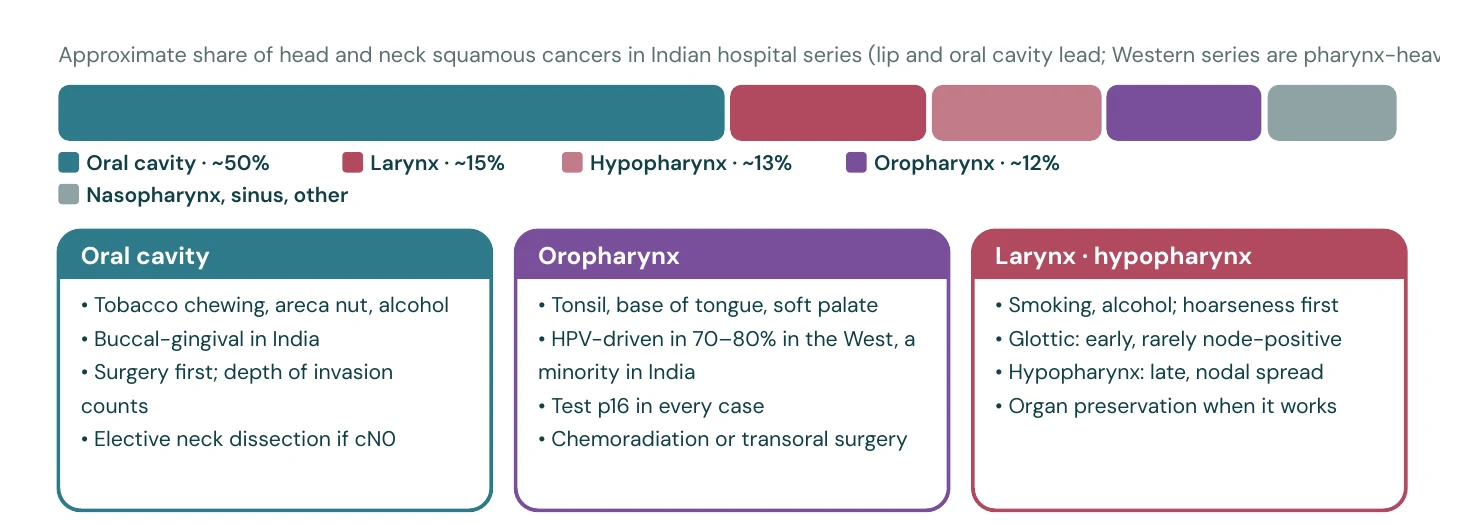
12 References & guidelines
  • AJCC Cancer Staging Manual, 8th edition (head and neck chapters, including HPV-mediated oropharyngeal cancer).
  • NCCN Clinical Practice Guidelines in Oncology: Head and Neck Cancers (current version); ASCO guideline on management of the neck in oral cavity and oropharynx cancer (2019); ESMO and EHNS-ESMO-ESTRO guidelines for head and neck squamous cell carcinoma.
  • American Cancer Society head and neck cancer survivorship care guideline; MASCC/ISOO mucositis guidance.
  • Indian context: National Programme for Prevention and Control of Non-Communicable Diseases (NP-NCD) oral cancer screening; GLOBOCAN 2022 (India); Tata Memorial Centre randomised trials cited above.
  • Cross-checked in October 2026 against 39 UpToDate topic reviews (epidemiology and risk factors; HPV- associated cancer; diagnosis and staging; overview of treatment; early oral cavity, oropharynx and larynx; locoregionally advanced oral cavity and oropharynx; chemoradiation approaches; adjuvant RT/chemoradiation; general principles of RT; radiation resistance; complications during treatment; mandibular and palatal reconstruction; speech and swallowing rehabilitation; quality of life; long-term survivors; recurrent and metastatic disease; plus, in a second batch, larynx and hypopharynx (early and advanced), unknown primary, management of the neck after RT, surveillance, re-irradiation, local recurrence, second primaries, chemoprevention and screening, late complications, dose and fractionation, pathology, HPV virology, epidemiology and treatment, treatment protocols, HIV and malignancy, sarcomas, alcohol, and sexual health). Facts only, in our own words; primary sources cited.
  • Not covered by the supplied topics and written from guidelines or memory, flagged for Dr. Haritha's review: India incidence figures and stage distribution; ConCERT (abstract, no PubMed record yet); KEYNOTE-412 (abstract); NP-NCD screening age; extraction timing before RT.
  • Nasopharyngeal carcinoma: no UpToDate nasopharynx topics were supplied; the 16 NPC citations were checked on 11 October 2026 against UpToDate reference lists (4) and PubMed, ClinicalTrials.gov or journal records (12). Citation audit (11 October 2026): every reference is numbered in order of first citation, each in- text trial link carries its number, and every printed journal, year, volume and first page matches its PubMed link.

Core trials cited on this page (88)

Journal, year, volume and first page; each links to the PubMed record by exact citation.

Numbered in order of first citation in the text

  1. KEYNOTE-689: Uppaluri R, Haddad RI, Tao Y, et al. Neoadjuvant and adjuvant pembrolizumab in locally advanced head and neck cancer. N Engl J Med 2025;393:37. PubMed Surgery-based multimodality therapy
  2. NIVOPOSTOP: Bourhis J, Aupérin A, Borel C, et al. Nivolumab added to cisplatin and radiotherapy versus cisplatin and radiotherapy alone after surgery for squamous cell carcinoma of the head and neck at high risk of relapse (GORTEC 2018-01 NIVOPOSTOP). Lancet 2026;407:363. PubMed Surgery-based multimodality therapy
  3. KEYNOTE-048: Burtness B, Harrington KJ, Greil R, et al. Pembrolizumab alone or with chemotherapy versus cetuximab with chemotherapy for recurrent or metastatic squamous cell carcinoma of the head and neck (KEYNOTE-048). Lancet 2019;394:1915. PubMed Recurrent and metastatic disease
  4. Alcohol and tobacco INHANCE (Hashibe 2007): Hashibe M, Brennan P, Benhamou S, et al. Alcohol drinking in never users of tobacco, cigarette smoking in never drinkers, and the risk of head and neck cancer: pooled analysis in the INHANCE consortium. J Natl Cancer Inst 2007;99:777. PubMed Causes HPV and pathology
  5. Betel quid meta-analysis (Guha 2014): Guha N, Warnakulasuriya S, Vlaanderen J, Straif K. Betel quid chewing and the risk of oral and oropharyngeal cancers: a meta-analysis with implications for cancer control. Int J Cancer 2014;135:1433. PubMed Causes, HPV and pathology
  6. Oral hygiene INHANCE (Hashim 2016): Hashim D, Sartori S, Brennan P, et al. The role of oral hygiene in head and neck cancer: results from the INHANCE consortium. Ann Oncol 2016;27:1619. PubMed Causes HPV and pathology
  7. Smoking and p16 outcome (Gillison 2012): Gillison ML, Zhang Q, Jordan R, et al. Tobacco smoking and increased risk of death and progression for patients with p16-positive and p16-negative oropharyngeal cancer. J Clin Oncol 2012;30:2102. PubMed Causes, HPV and pathology
  8. Kerala oral screening trial: Sankaranarayanan R, Ramadas K, Thomas G, et al. Effect of screening on oral cancer mortality in Kerala, India: a cluster-randomised controlled trial. Lancet 2005;365:1927. PubMed Screening
  9. p16/HPV discordance (EPIC-OPC): Mehanna H, Taberna M, von Buchwald C, et al. Prognostic implications of p16 and HPV discordance in oropharyngeal cancer (HNCIG-EPIC-OPC). Lancet Oncol 2023;24:239. PubMed Causes HPV and pathology
  10. TCGA head and neck (2015): Cancer Genome Atlas Network. Comprehensive genomic characterization of head and neck squamous cell carcinomas. Nature 2015;517:576. PubMed HPV associated cancer
  11. Field cancerisation (Slaughter 1953): Slaughter DP, Southwick HW, Smejkal W. Field cancerization in oral stratified squamous epithelium; clinical implications of multicentric origin. Cancer 1953;6:963. PubMed HPV associated cancer
  12. Field cancerisation and second primaries (Braakhuis 2002): Braakhuis BJ, Tabor MP, Leemans CR, et al. Second primary tumors and field cancerization in oral and oropharyngeal cancer: molecular techniques provide new insights and definitions. Head Neck 2002;24:198. PubMed HPV-associated cancer
  13. MARCH-HPV: Lassen P, Lacas B, Pignon JP, et al. Prognostic impact of HPV-associated p16-expression and smoking status on outcomes following radiotherapy for oropharyngeal cancer: the MARCH-HPV project. Radiother Oncol 2018;126:107. PubMed HPV-associated cancer
  14. Oral HPV and oropharyngeal cancer (D'Souza 2007): D'Souza G, Kreimer AR, Viscidi R, et al. Case-control study of human papillomavirus and oropharyngeal cancer. N Engl J Med 2007;356:1944. PubMed HPV associated cancer
  15. HPV16 risk-factor profiles (Gillison 2008): Gillison ML, D'Souza G, Westra W, et al. Distinct risk factor profiles for human papillomavirus type 16-positive and human papillomavirus type 16-negative head and neck cancers. J Natl Cancer Inst 2008;100:407. PubMed HPV-associated cancer
  16. Oral HPV in patients and partners (D'Souza 2014): D'Souza G, Gross ND, Pai SI, et al. Oral human papillomavirus (HPV) infection in HPV-positive patients with oropharyngeal cancer and their partners. J Clin Oncol 2014;32:2408. PubMed HPV-associated cancer
  17. ICON-S: O'Sullivan B, Huang SH, Su J, et al. Development and validation of a staging system for HPV-related oropharyngeal cancer by the International Collaboration on Oropharyngeal cancer Network for Staging (ICON-S). Lancet Oncol 2016;17:440. PubMed HPV-associated cancer
  18. Survival after progression by HPV (Fakhry 2014): Fakhry C, Zhang Q, Nguyen-Tan PF, et al. Human papillomavirus and overall survival after progression of oropharyngeal squamous cell carcinoma. J Clin Oncol 2014;32:3365. PubMed HPV associated cancer
  19. ASCO/CAP HPV testing guideline: Fakhry C, Lacchetti C, Rooper LM, et al. Human papillomavirus testing in head and neck carcinomas: ASCO clinical practice guideline endorsement of the College of American Pathologists guideline. J Clin Oncol 2018;36:3152. PubMed HPV-associated cancer
  20. HPV and survival (Ang 2010): Ang KK, Harris J, Wheeler R, et al. Human papillomavirus and survival of patients with oropharyngeal cancer. N Engl J Med 2010;363:24. PubMed Causes HPV and pathology
  21. ORATOR: Nichols AC, Theurer J, Prisman E, et al. Radiotherapy versus transoral robotic surgery and neck dissection for oropharyngeal squamous cell carcinoma (ORATOR). Lancet Oncol 2019;20:1349. PubMed Surgery and the neck
  22. MACH-NC 2021: Lacas B, Carmel A, Landais C, et al. Meta-analysis of chemotherapy in head and neck cancer (MACH-NC): an update on 107 randomized trials and 19,805 patients. Radiother Oncol 2021;156:281. PubMed Chemoradiation and organ preservation
  23. RTOG 1016: Gillison ML, Trotti AM, Harris J, et al. Radiotherapy plus cetuximab or cisplatin in human papillomavirus-positive oropharyngeal cancer (NRG Oncology RTOG 1016). Lancet 2019;393:40. PubMed Chemoradiation and organ preservation
  24. De-ESCALaTE HPV: Mehanna H, Robinson M, Hartley A, et al. Radiotherapy plus cisplatin or cetuximab in low-risk human papillomavirus-positive oropharyngeal cancer (De-ESCALaTE HPV). Lancet 2019;393:51. PubMed Chemoradiation and organ preservation
  25. ARTSCAN III: Gebre-Medhin M, Brun E, Engström P, et al. ARTSCAN III: a randomized phase III study comparing chemoradiotherapy with cisplatin versus cetuximab in locoregionally advanced head and neck squamous cell cancer. J Clin Oncol 2021;39:38. PubMed Chemoradiation and organ preservation
  26. Docetaxel radiosensitiser (Tata): Patil VM, Noronha V, Menon N, et al. Results of phase III randomized trial for use of docetaxel as a radiosensitizer in patients with head and neck cancer, unsuitable for cisplatin-based chemoradiation. J Clin Oncol 2023;41:2350. PubMed Chemoradiation and organ preservation
  27. ECOG 3311: Ferris RL, Flamand Y, Weinstein GS, et al. Phase II randomized trial of transoral surgery and low-dose intensity modulated radiation therapy in resectable p16+ locally advanced oropharynx cancer (E3311). J Clin Oncol 2022;40:138. PubMed HPV-associated cancer
  28. EORTC 22931: Bernier J, Domenge C, Ozsahin M, et al. Postoperative irradiation with or without concomitant chemotherapy for locally advanced head and neck cancer. N Engl J Med 2004;350:1945. PubMed Surgery based multimodality therapy
  29. CheckMate 141: Ferris RL, Blumenschein G Jr, Fayette J, et al. Nivolumab for recurrent squamous-cell carcinoma of the head and neck. N Engl J Med 2016;375:1856. PubMed Recurrent and metastatic disease
  30. ctHPV DNA surveillance (Chera 2020): Chera BS, Kumar S, Shen C, et al. Plasma circulating tumor HPV DNA for the surveillance of cancer recurrence in HPV-associated oropharyngeal cancer. J Clin Oncol 2020;38:1050. PubMed HPV associated cancer
  31. PET-NECK: Mehanna H, Wong WL, McConkey CC, et al. PET-CT surveillance versus neck dissection in advanced head and neck cancer. N Engl J Med 2016;374:1444. PubMed Surgery and the neck
  32. NRG-HN002: Yom SS, Torres-Saavedra P, Caudell JJ, et al. Reduced-dose radiation therapy for HPV-associated oropharyngeal carcinoma (NRG Oncology HN002). J Clin Oncol 2021;39:956. PubMed HPV associated cancer
  33. MC1273: Ma DJ, Price KA, Moore EJ, et al. Phase II evaluation of aggressive dose de-escalation for adjuvant chemoradiotherapy in human papillomavirus-associated oropharynx squamous cell carcinoma. J Clin Oncol 2019;37:1909. PubMed HPV-associated cancer
  34. De-intensified CRT (Chera 2019): Chera BS, Amdur RJ, Green R, et al. Phase II trial of de-intensified chemoradiotherapy for human papillomavirus-associated oropharyngeal squamous cell carcinoma. J Clin Oncol 2019;37:2661. PubMed HPV-associated cancer
  35. Hypoxia-directed de-escalation (Lee 2024): Lee NY, Sherman EJ, Schöder H, et al. Hypoxia-directed treatment of human papillomavirus-related oropharyngeal carcinoma. J Clin Oncol 2024;42:940. PubMed HPV associated cancer
  36. Hypoxic modification meta-analysis (Overgaard 2011): Overgaard J. Hypoxic modification of radiotherapy in squamous cell carcinoma of the head and neck: a systematic review and meta-analysis. Radiother Oncol 2011;100:22. PubMed Radiotherapy and radiobiology
  37. DAHANCA 10: Overgaard J, Hoff CM, Hansen HS, et al. DAHANCA 10: effect of darbepoetin alfa and radiotherapy in the treatment of squamous cell carcinoma of the head and neck. Radiother Oncol 2018;127:12. PubMed Radiotherapy and radiobiology
  38. Elective neck dissection (D'Cruz): D'Cruz AK, Vaish R, Kapre N, et al. Elective versus therapeutic neck dissection in node- negative oral cancer. N Engl J Med 2015;373:521. PubMed Surgery and the neck
  39. Senti-MERORL: Garrel R, Poissonnet G, Moyà Plana A, et al. Equivalence randomized trial to compare treatment on the basis of sentinel node biopsy versus neck node dissection in operable T1-T2N0 oral and oropharyngeal cancer. J Clin Oncol 2020;38:4010. PubMed Surgery and the neck
  40. VA Larynx: Department of Veterans Affairs Laryngeal Cancer Study Group; Wolf GT, Fisher SG, et al. Induction chemotherapy plus radiation compared with surgery plus radiation in patients with advanced laryngeal cancer. N Engl J Med 1991;324:1685. PubMed Chemoradiation and organ preservation
  41. RTOG 91-11: Forastiere AA, Goepfert H, Maor M, et al. Concurrent chemotherapy and radiotherapy for organ preservation in advanced laryngeal cancer. N Engl J Med 2003;349:2091. PubMed Chemoradiation and organ preservation
  42. EORTC 24891 10-year: Lefebvre JL, Andry G, Chevalier D, et al. Laryngeal preservation with induction chemotherapy for hypopharyngeal squamous cell carcinoma: 10-year results of EORTC trial 24891. Ann Oncol 2012;23:2708. PubMed Chemoradiation and organ preservation
  43. PARSPORT: Nutting CM, Morden JP, Harrington KJ, et al. Parotid-sparing intensity modulated versus conventional radiotherapy in head and neck cancer (PARSPORT). Lancet Oncol 2011;12:127. PubMed Radiotherapy and radiobiology
  44. IMRT vs 3D-CRT (Tata): Gupta T, Agarwal J, Jain S, et al. Three-dimensional conformal radiotherapy versus intensity modulated radiation therapy in squamous cell carcinoma of the head and neck: a randomized controlled trial. Radiother Oncol 2012;104:343. PubMed Radiotherapy and radiobiology
  45. DARS: Nutting C, Finneran L, Roe J, et al. Dysphagia-optimised intensity-modulated radiotherapy versus standard IMRT in patients with head and neck cancer (DARS). Lancet Oncol 2023;24:868. PubMed Radiotherapy and radiobiology
  46. MARCH meta-analysis: Lacas B, Bourhis J, Overgaard J, et al. Role of radiotherapy fractionation in head and neck cancers (MARCH): an updated meta-analysis. Lancet Oncol 2017;18:1221. PubMed Radiotherapy and radiobiology
  47. Hyperfractionation meta-analysis (Bourhis 2006): Bourhis J, Overgaard J, Audry H, et al. Hyperfractionated or accelerated radiotherapy in head and neck cancer: a meta-analysis. Lancet 2006;368:843. PubMed Radiotherapy and radiobiology
  48. Postoperative RT timing (Ang 2001): Ang KK, Trotti A, Brown BW, et al. Randomized trial addressing risk features and time factors of surgery plus radiotherapy in advanced head-and-neck cancer. Int J Radiat Oncol Biol Phys 2001;51:571. PubMed Radiotherapy and radiobiology
  49. Tata weekly vs 3-weekly cisplatin: Noronha V, Joshi A, Patil VM, et al. Once-a-week versus once-every-3-weeks cisplatin chemoradiation for locally advanced head and neck cancer: a phase III randomized noninferiority trial. J Clin Oncol 2018;36:1064. PubMed Chemoradiation and organ preservation
  50. Bonner cetuximab-RT: Bonner JA, Harari PM, Giralt J, et al. Radiotherapy plus cetuximab for squamous-cell carcinoma of the head and neck. N Engl J Med 2006;354:567. PubMed Chemoradiation and organ preservation
  51. Bonner 5-year: Bonner JA, Harari PM, Giralt J, et al. Radiotherapy plus cetuximab for locoregionally advanced head and neck cancer: 5-year survival data from a phase 3 randomised trial. Lancet Oncol 2010;11:21. PubMed Chemoradiation and organ preservation
  52. RTOG 0522: Ang KK, Zhang Q, Rosenthal DI, et al. Randomized phase III trial of concurrent accelerated radiation plus cisplatin with or without cetuximab for stage III to IV head and neck carcinoma: RTOG 0522. J Clin Oncol 2014;32:2940. PubMed Chemoradiation and organ preservation
  53. TAX 324: Posner MR, Hershock DM, Blajman CR, et al. Cisplatin and fluorouracil alone or with docetaxel in head and neck cancer. N Engl J Med 2007;357:1705. PubMed Chemoradiation and organ preservation
  54. TAX 323: Vermorken JB, Remenar E, van Herpen C, et al. Cisplatin, fluorouracil, and docetaxel in unresectable head and neck cancer. N Engl J Med 2007;357:1695. PubMed Chemoradiation and organ preservation
  55. PARADIGM: Haddad R, O’Neill A, Rabinowits G, et al. Induction chemotherapy followed by concurrent chemoradiotherapy versus concurrent chemoradiotherapy alone in locally advanced head and neck cancer (PARADIGM). Lancet Oncol 2013;14:257. PubMed Chemoradiation and organ preservation
  56. DeCIDE: Cohen EE, Karrison TG, Kocherginsky M, et al. Phase III randomized trial of induction chemotherapy in patients with N2 or N3 locally advanced head and neck cancer. J Clin Oncol 2014;32:2735. PubMed Chemoradiation and organ preservation
  57. RTOG 91-11 long-term: Forastiere AA, Zhang Q, Weber RS, et al. Long-term results of RTOG 91-11: a comparison of three nonsurgical treatment strategies to preserve the larynx. J Clin Oncol 2013;31:845. PubMed Chemoradiation and organ preservation
  58. TREMPLIN: Lefebvre JL, Pointreau Y, Rolland F, et al. Induction chemotherapy followed by either chemoradiotherapy or bioradiotherapy for larynx preservation: the TREMPLIN randomized phase II study. J Clin Oncol 2013;31:853. PubMed Chemoradiation and organ preservation
  59. JAVELIN Head and Neck 100: Lee NY, Ferris RL, Psyrri A, et al. Avelumab plus standard-of-care chemoradiotherapy versus chemoradiotherapy alone in locally advanced squamous cell carcinoma of the head and neck. Lancet Oncol 2021;22:450. PubMed Chemoradiation and organ preservation
  60. PembroRad: Tao Y, Biau J, Sun XS, et al. Pembrolizumab versus cetuximab concurrent with radiotherapy in patients with locally advanced squamous cell carcinoma of head and neck unfit for cisplatin (GORTEC 2015-01 PembroRad). Ann Oncol 2023;34:101. PubMed Chemoradiation and organ preservation
  61. RTOG 9501: Cooper JS, Pajak TF, Forastiere AA, et al. Postoperative concurrent radiotherapy and chemotherapy for high-risk squamous-cell carcinoma of the head and neck. N Engl J Med 2004;350:1937. PubMed Surgery based multimodality therapy
  62. EORTC/RTOG pooled risk analysis (Bernier 2005): Bernier J, Cooper JS, Pajak TF, et al. Defining risk levels in locally advanced head and neck cancers: a comparative analysis of concurrent postoperative radiation plus chemotherapy trials of the EORTC (22931) and RTOG (9501). Head Neck 2005;27:843. PubMed Surgery based multimodality therapy
  63. RTOG 9501 long-term: Cooper JS, Zhang Q, Pajak TF, et al. Long-term follow-up of the RTOG 9501/intergroup phase III trial: postoperative concurrent radiation therapy and chemotherapy in high-risk squamous cell carcinoma of the head and neck. Int J Radiat Oncol Biol Phys 2012;84:1198. PubMed Surgery-based multimodality therapy
  64. JCOG1008: Kiyota N, Tahara M, Mizusawa J, et al. Weekly cisplatin plus radiation for postoperative head and neck cancer (JCOG1008). J Clin Oncol 2022;40:1980. PubMed Surgery-based multimodality therapy
  65. KEYNOTE-048 update: Harrington KJ, Burtness B, Greil R, et al. Pembrolizumab with or without chemotherapy in recurrent or metastatic head and neck squamous cell carcinoma: updated results of the phase III KEYNOTE-048 study. J Clin Oncol 2023;41:790. PubMed Recurrent and metastatic disease
  66. EXTREME: Vermorken JB, Mesia R, Rivera F, et al. Platinum-based chemotherapy plus cetuximab in head and neck cancer. N Engl J Med 2008;359:1116. PubMed Recurrent and metastatic disease
  67. CheckMate 651: Haddad RI, Harrington K, Tahara M, et al. Nivolumab plus ipilimumab versus EXTREME regimen as first-line treatment for recurrent/metastatic SCCHN: final results of CheckMate 651. J Clin Oncol 2023;41:2166. PubMed Recurrent and metastatic disease
  68. KEYNOTE-040: Cohen EEW, Soulières D, Le Tourneau C, et al. Pembrolizumab versus methotrexate, docetaxel, or cetuximab for recurrent or metastatic head-and-neck squamous cell carcinoma (KEYNOTE-040). Lancet 2019;393:156. PubMed Recurrent and metastatic disease
  69. Triple metronomic (Tata): Patil VM, Noronha V, Joshi A, et al. Phase I/II study of palliative triple metronomic chemotherapy in platinum-refractory/early-failure oral cancer. J Clin Oncol 2019;37:3032. PubMed Recurrent and metastatic disease
  70. Low-dose nivolumab (Tata): Patil VM, Noronha V, Menon N, et al. Low-dose immunotherapy in head and neck cancer: a randomized study. J Clin Oncol 2023;41:222. PubMed Recurrent and metastatic disease
  71. EBV DNA and NPC outcome (Lin 2004): Lin JC, Wang WY, Chen KY, et al. Quantification of plasma Epstein-Barr virus DNA in patients with advanced nasopharyngeal carcinoma. N Engl J Med 2004;350:2461. PubMed Nasopharyngeal carcinoma
  72. Plasma EBV DNA recommendations (Lee 2021): Lee AWM, Lee VHF, Ng WT, et al. A systematic review and recommendations on the use of plasma EBV DNA for nasopharyngeal carcinoma. Eur J Cancer 2021;153:109. PubMed Nasopharyngeal carcinoma
  73. EBV DNA screening for NPC (Chan 2017): Chan KCA, Woo JKS, King A, et al. Analysis of plasma Epstein-Barr virus DNA to screen for nasopharyngeal cancer. N Engl J Med 2017;377:513. PubMed Nasopharyngeal carcinoma
  74. IMRT in early NPC (Kam 2007): Kam MK, Leung SF, Zee B, et al. Prospective randomized study of intensity-modulated radiotherapy on salivary gland function in early-stage nasopharyngeal carcinoma patients. J Clin Oncol 2007;25:4873. PubMed Nasopharyngeal carcinoma
  75. Concurrent CRT in stage II NPC (Chen 2011): Chen QY, Wen YF, Guo L, et al. Concurrent chemoradiotherapy vs radiotherapy alone in stage II nasopharyngeal carcinoma: phase III randomized trial. J Natl Cancer Inst 2011;103:1761. PubMed Nasopharyngeal carcinoma
  76. Induction GP in NPC (Zhang 2019): Zhang Y, Chen L, Hu GQ, et al. Gemcitabine and cisplatin induction chemotherapy in nasopharyngeal carcinoma. N Engl J Med 2019;381:1124. PubMed Nasopharyngeal carcinoma
  77. Induction TPF in NPC (Sun 2016): Sun Y, Li WF, Chen NY, et al. Induction chemotherapy plus concurrent chemoradiotherapy versus concurrent chemoradiotherapy alone in locoregionally advanced nasopharyngeal carcinoma. Lancet Oncol 2016;17:1509. PubMed Nasopharyngeal carcinoma
  78. MAC-NPC meta-analysis: Blanchard P, Lee A, Marguet S, et al. Chemotherapy and radiotherapy in nasopharyngeal carcinoma: an update of the MAC-NPC meta-analysis. Lancet Oncol 2015;16:645. PubMed Nasopharyngeal carcinoma
  79. Adjuvant metronomic capecitabine in NPC: Chen YP, Liu X, Zhou Q, et al. Metronomic capecitabine as adjuvant therapy in locoregionally advanced nasopharyngeal carcinoma: a multicentre, open-label, parallel-group, randomised, controlled, phase 3 trial. Lancet 2021;398:303. PubMed Nasopharyngeal carcinoma
  80. Endoscopic surgery for recurrent NPC (Liu 2021): Liu YP, Wen YH, Tang J, et al. Endoscopic surgery compared with intensity- modulated radiotherapy in resectable locally recurrent nasopharyngeal carcinoma. Lancet Oncol 2021;22:381. PubMed Nasopharyngeal carcinoma
  81. Hyperfractionated re-IMRT for recurrent NPC (You 2023): You R, Liu YP, Xie YL, et al. Hyperfractionation compared with standard fractionation in intensity-modulated radiotherapy for patients with locally advanced recurrent nasopharyngeal carcinoma. Lancet 2023;401:917. PubMed Nasopharyngeal carcinoma
  82. GP vs FP in metastatic NPC (Zhang 2016): Zhang L, Huang Y, Hong S, et al. Gemcitabine plus cisplatin versus fluorouracil plus cisplatin in recurrent or metastatic nasopharyngeal carcinoma. Lancet 2016;388:1883. PubMed Nasopharyngeal carcinoma
  83. JUPITER-02: Mai HQ, Chen QY, Chen D, et al. Toripalimab or placebo plus chemotherapy as first-line treatment in advanced nasopharyngeal carcinoma: a multicenter randomized phase 3 trial. Nat Med 2021;27:1536. PubMed Nasopharyngeal carcinoma
  84. CAPTAIN-1st: Yang Y, Qu S, Li J, et al. Camrelizumab versus placebo in combination with gemcitabine and cisplatin as first-line treatment for recurrent or metastatic nasopharyngeal carcinoma (CAPTAIN-1st). Lancet Oncol 2021;22:1162. PubMed Nasopharyngeal carcinoma
  85. Intergroup 0099: Al-Sarraf M, LeBlanc M, Giri PG, et al. Chemoradiotherapy versus radiotherapy in patients with advanced nasopharyngeal cancer: phase III randomized Intergroup study 0099. J Clin Oncol 1998;16:1310. PubMed Nasopharyngeal carcinoma
  86. JUPITER-02 final OS: Mai HQ, Chen QY, Chen D, et al. Toripalimab plus chemotherapy for recurrent or metastatic nasopharyngeal carcinoma: the JUPITER-02 randomized clinical trial. JAMA 2023;330:1961. PubMed Nasopharyngeal carcinoma
  87. Late dysphagia after RT (Hutcheson 2012): Hutcheson KA, Lewin JS, Barringer DA, et al. Late dysphagia after radiotherapy- based treatment of head and neck cancer. Cancer 2012;118:5793. PubMed Survivorship
  88. ACS head and neck survivorship guideline: Cohen EE, LaMonte SJ, Erb NL, et al. American Cancer Society head and neck cancer survivorship care guideline. CA Cancer J Clin 2016;66:203. PubMed Survivorship

How to cite this page

VancouverChiramana H. Head & Neck Cancer: a mini review for clinicians. Oncology Knowledge Hub [Internet]. Nellore (India): drharitha.co.in; 2026 [updated 2026 Oct 11; cited year month day]. Available from: https://drharitha.co.in/professionals/head-neck

APA 7Chiramana, H. (2026, October 11). Head & Neck Cancer: A mini review for clinicians. Oncology Knowledge Hub. Retrieved Month Day, Year, from https://drharitha.co.in/professionals/head-neck

Free to use and share for education with attribution; please do not alter or use commercially (CC BY-NC-ND 4.0). Replace the italic parts with the date you accessed the page.

Educational summary for health professionals, written in our own words from current guidelines and primary trials. No chemotherapy doses are given. Verify current guidelines, Indian regulatory approvals and individual patient factors before treatment decisions.

Dr. Haritha Chiramana
Written by Dr. Haritha ChiramanaSenior Medical Oncologist & Hemato-Oncologist · MD, DM (Medical Oncology) · C.R. Reddy Cancer Center, Nellore, Andhra Pradesh, India

Medically reviewed by Dr. Haritha Chiramana on 8 October 2026. This page is general education and cannot replace an individual consultation.